


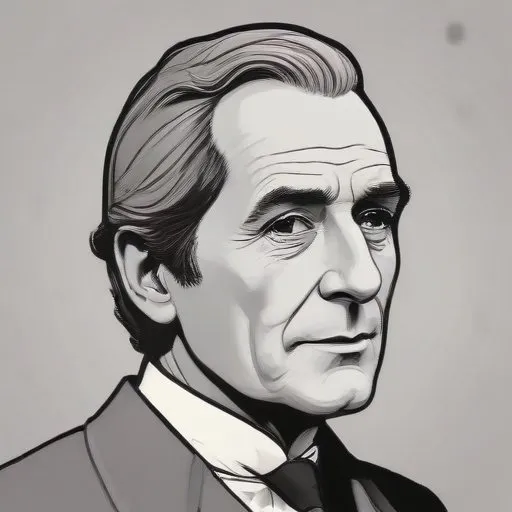
The Prime Minister who oversaw the passage of the Reform Act of 1832, a landmark legislation that reformed the British electoral system, and is also famous for Earl Grey tea, named after him.
Visionary statesman, ardent reformer, and Prime Minister of the United Kingdom from 1830 to 1834, Charles Grey, 2nd Earl Grey, left an indelible mark on British history. His remarkable tenure witnessed two monumental reforms: the Reform Act of 1832, which expanded the electorate of the House of Commons, and the Slavery Abolition Act of 1833, which paved the way for the abolition of slavery in most of the British Empire.
Descended from a long-established Northumbrian family, Grey was born on March 13, 1764, at Howick Hall, the second but eldest surviving son of General Charles Grey, 1st Earl Grey, and his wife Elizabeth. He was educated at Richmond School, followed by Eton and Trinity College, Cambridge, where he developed his exceptional skills in Latin and English composition and declamation.
Grey's entry into politics was marked by his election to Parliament for the Northumberland constituency in 1786, at the tender age of 22. He soon joined the Whig circle of Charles James Fox, Richard Brinsley Sheridan, and the Prince of Wales, later King George IV.
Grey's commitment to reform led him to become a vocal opponent of William Pitt the Younger's foreign and domestic policies in the 1790s. His resignation as Foreign Secretary in 1807, in protest against George III's rejection of Catholic emancipation, demonstrated his unwavering dedication to the cause. As Prime Minister, Grey's government introduced the Reform Act of 1832, which greatly expanded the electorate of the House of Commons, and the Slavery Abolition Act of 1833, which led to the gradual abolition of slavery in most of the British Empire.
Scholars rank Grey highly among British Prime Ministers, crediting him with averting civil strife and enabling Victorian progress. His reformist legacy has endured, shaping the course of British history and inspiring generations to come.
Grey was a staunch advocate for parliamentary reform, Catholic emancipation, and the abolition of slavery. His commitment to these causes reflected his deep-seated belief in the principles of liberty, equality, and justice.
Grey's reforms paved the way for the development of modern British democracy, ensuring greater representation for the people and the abolition of a morally reprehensible institution. His legacy continues to inspire reformers and statesmen around the world.
Born in 1738
The British monarch who ruled during the American Revolution, losing the colonies, and later suffered a mental illness that led to a regency crisis. He's also known for his cultural and artistic patronage.
Born in 1769
A French military leader who rose to prominence during the French Revolution and became Emperor of France, known for his military conquests and reorganization of Europe. He is also famous for his Napoleonic Code, which remains a foundation of modern law.
Born in 1762
The only British Prime Minister to be assassinated, he served from 1809 to 1812 and is known for his strong leadership during the Napoleonic Wars.
Born in 1770
A skilled lawyer and politician who served as Prime Minister of the United Kingdom, known for his strong oratory skills and brief but influential tenure in office.
