


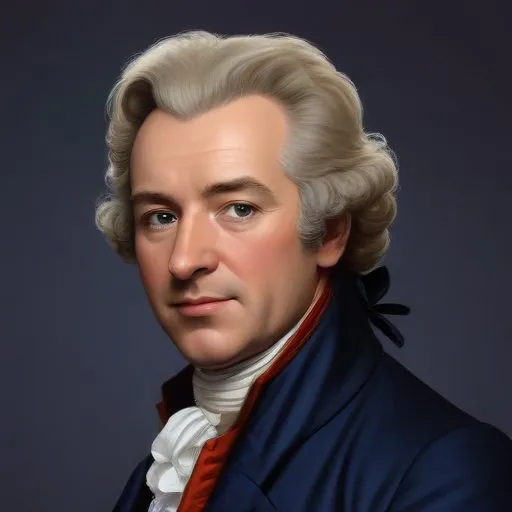
A witty and influential 18th-century playwright and politician who penned iconic comedies like "The School for Scandal" and "The Rivals", shaping English literature and theatre.
Richard Brinsley Sheridan, born on October 30, 1751, was a renowned Anglo-Irish playwright, writer, and Whig politician who left an indelible mark on the world of literature and politics. He is best known for his witty and satirical plays, such as The Rivals, The Duenna, and The School for Scandal, which continue to be performed and celebrated around the world.
Sheridan was born in Dublin, Ireland, to a family of artists and writers. His mother, Frances Sheridan, was a successful playwright and novelist, and his father, Thomas Sheridan, was an actor-manager and writer who later became a prominent figure in education. Sheridan's early years were filled with learning and creativity, as he attended the English Grammar School in Grafton Street and later Harrow School from 1762 to 1768.
Sheridan's writing career began in the early 1770s, when he penned his first play, The Rivals, which was a critical and commercial success. He went on to write several other notable plays, including The Duenna, The School for Scandal, and A Trip to Scarborough. His works were known for their clever dialogue, satirical humor, and witty characters, which captured the essence of the 18th-century British high society.
In addition to his literary pursuits, Sheridan was also a dedicated politician. He served as a Whig Member of Parliament for Stafford, Westminster, and Ilchester from 1780 to 1812. He was a strong advocate for the abolition of slavery and voted in favor of the repeal of the Test Acts. Sheridan's political career was marked by his eloquence, passion, and commitment to social justice.
Sheridan's contributions to literature and politics were recognized during his lifetime. He was appointed Treasurer of the Navy from 1806 to 1807 and was buried at Poets' Corner in Westminster Abbey after his death in 1816. Today, his plays are considered classics of the Western canon and continue to be performed and studied around the world.
Sheridan's works often explored themes of morality, social justice, and personal responsibility. He was a strong advocate for the abolition of slavery and was critical of the social ills of his time. Through his writings, Sheridan promoted the ideals of tolerance, empathy, and understanding.
Sheridan's plays continue to be celebrated for their wit, satire, and social commentary. His works have inspired generations of writers, artists, and politicians, and have had a lasting impact on the world of literature and politics.
Sheridan was recognized for his contributions to literature and politics during his lifetime. He was awarded a pension of £1,000 per annum in recognition of his literary achievements.
Born in 1728
A celebrated 18th-century writer, known for his witty plays and novels of manners that satirized the social class system, leaving a lasting impact on English literature.
Born in 1717
A renowned 18th-century theater personality who dominated London's stages with his captivating performances and penned numerous plays, shaping the English theater scene.
Born in 1713
Wrote influential and innovative novels, particularly "Tristram Shandy", that experimented with narrative structure and style, influencing the development of modern literature.
Born in 1707
Wrote influential and satirical novels of manners, such as "Tom Jones", that explored the social and moral issues of 18th-century England.
Born in 1721
A Scottish-Italian poet and author who wrote influential novels of manners, satire, and adventure, including "Humphry Clinker" and "Peregrine Pickle". Known for his vivid descriptions of 18th-century life and society.
Born in 1672
A pioneering journalist and playwright who co-founded The Tatler and The Spectator, influential publications that shaped 18th-century British literature and culture.
Born in 1672
A renowned 18th-century writer and statesman who penned influential essays and plays, shaping English literature and politics. He's most famous for his witty, insightful writings in The Spectator magazine.
