


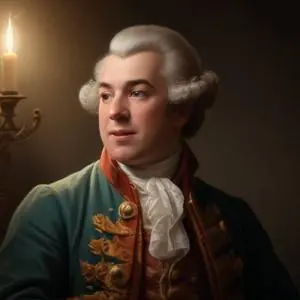
A renowned 18th-century theater personality who dominated London's stages with his captivating performances and penned numerous plays, shaping the English theater scene.
David Garrick, the renowned English actor, playwright, theatre manager, and producer, left an indelible mark on European theatrical practice throughout the 18th century. His influential career spanned nearly three decades, during which he revolutionized the art of acting, playwriting, and theatre management, earning him a revered place in the annals of theatrical history.
Garrick's passion for the stage was evident from his amateur theatrical days, where he impressed audiences with his performances in various roles. His portrayal of Richard III in Shakespeare's play caught the attention of Charles Fleetwood, who engaged him for a season at the prestigious Theatre Royal, Drury Lane in London's West End.
This breakthrough marked the beginning of Garrick's five-year association with the Drury Lane company, during which he refined his craft and purchased a share of the theatre with James Lacy. This strategic move paved the way for his eventual 29-year tenure as the manager of Drury Lane, a period that would see the theatre rise to unimaginable heights.
Garrick's impact on the theatrical landscape was profound. He advocated for realistic acting, moving away from the bombastic style that dominated the era. His nuanced performances captivated audiences, and his direction influenced the styles of many prominent actors of the English stage.
As a visionary, Garrick recognized the need for reforms in audience behavior. He introduced measures to regulate audience conduct, which, although initially met with resistance, ultimately contributed to a more refined theatrical experience.
Garrick's influence extended beyond the realm of acting. He brought a sense of consistency to productions, overseeing every aspect, from set design to costumes and special effects. This attention to detail elevated the overall quality of performances, setting a new benchmark for theatrical productions.
While critics may not have regarded Garrick as a skilled playwright, his adaptability and commitment to reviving forgotten plays are undeniable. He played a crucial role in popularizing Shakespeare's works, making them accessible to a broader audience.
David Garrick's remarkable life came full circle when he was honored with a grand public funeral at Westminster Abbey, where he was laid to rest in Poets' Corner. This poignant tribute was a testament to his enduring impact on European theatre.
Garrick's influence can be seen in the many actors, playwrights, and theatre managers who followed in his footsteps. His unwavering dedication to his craft, combined with his innovative spirit, has left an indelible mark on the world of theatre.
David Garrick's profound influence on European theatre continues to inspire generations of actors, playwrights, and theatre enthusiasts. His groundbreaking work has left an indelible mark on the world of theatre, solidifying his position as one of the most important figures in theatrical history.
Born in 1846
A Nigerian priest and historian who wrote the first comprehensive history of the Yoruba people, providing valuable insights into their culture and traditions.
Born in 1728
A celebrated 18th-century writer, known for his witty plays and novels of manners that satirized the social class system, leaving a lasting impact on English literature.
Born in 1751
A witty and influential 18th-century playwright and politician who penned iconic comedies like "The School for Scandal" and "The Rivals", shaping English literature and theatre.
Born in 1685
A renowned Baroque composer and organist, famous for creating majestic orchestral suites, operas, and oratorios, including the iconic "Messiah" masterpiece.
Born in 1907
A renowned thespian who dominated the British stage and screen, bringing Shakespearean characters to life with his commanding presence and rich voice.
Born in 1904
A renowned thespian, celebrated for his commanding stage presence and iconic performances in Shakespearean plays and films, earning him a knighthood.
Born in 1902
A renowned stage and screen actor, celebrated for his distinctive voice and authoritative presence, starring in iconic films like "David Copperfield" and "Doctor Zhivago".
Born in 1914
A renowned actor who brought iconic characters to life on screen, including Obi-Wan Kenobi in the Star Wars franchise.
