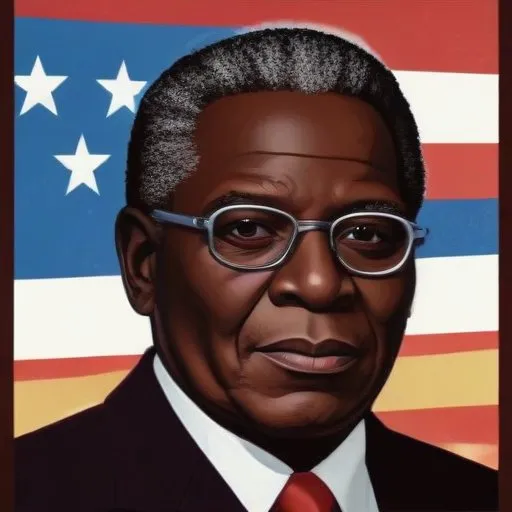
Edward James Roye: Liberia's Fifth President and Pioneering Figure
A Leader of Liberia and True Whig Party's First President
Edward James Roye is renowned for serving as the fifth president of Liberia from 1870 to 1871, making him the first member of the True Whig Party to hold the office. During his presidency, Roye played a significant role in shaping Liberia's political landscape.
Early Life and Education
Born on February 3, 1815, in Newark, Ohio, Edward James Roye was the son of John and Nancy Roye, freed African American slaves who had escaped from Kentucky. His family's prosperity enabled him to attend Ohio University, where he laid the foundation for his future success.
The American Colonization Society and Emigration to Liberia
In 1846, Roye was drawn to the American Colonization Society's efforts to relocate African Americans to Liberia, a colony in West Africa. He emigrated to Liberia with his family, bringing with him $1,000 in capital (equivalent to $30,000 in 2023). This bold move marked the beginning of his involvement in Liberian politics.
Rise to Prominence
Within three years of his arrival, Roye became an active participant in Liberian politics. He served as a representative and speaker of the Liberian House of Representatives (1849-1850) and later as Chief Justice of the Supreme Court of Liberia. Roye also held the position of Secretary of the Treasury.
Presidential Ambitions and Setbacks
In 1855, Roye contested the presidential elections but unfortunately lost. Undeterred, he continued to build his career as a successful merchant and trader. By 1870, his fortune was estimated to be around $200,000 (equivalent to $4,800,000 in 2023).
Presidency and Overthrow
Roye's presidential ambitions were finally realized in 1870 when he became the fifth president of Liberia. However, his tenure was short-lived, as he was overthrown in the 1871 Liberian coup d'état. Tragically, Roye lost his life during the tumultuous period that followed.
Legacy and Impact
Edward James Roye's contributions to Liberian politics and his pioneering spirit have left a lasting impact on the country's history. As the first True Whig Party president, he paved the way for future generations of Liberian leaders. His legacy serves as a testament to the power of perseverance and determination.
Trivia and Fun Facts
- Roye's father, John, managed a ferry across the Wabash River in Terre Haute, Indiana.
- Edward James Roye's barbershop in Terre Haute was the largest in the African American community.
- In 1857, Roye purchased the brig Eusebia for his trading business between Monrovia and New York City.
By examining the life and achievements of Edward James Roye, we gain valuable insights into the complexities of Liberia's early history and the enduring spirit of its people.
FAQ
What was Edward James Royes role in Liberian politics?
Edward James Roye was the 5th President of Liberia, serving from 1870 to 1871. He was a member of the True Whig Party, which dominated Liberian politics for over a century.
What was Edward James Royes stance on slavery?
Edward James Roye was an American-Liberian who was born into slavery in Ohio, USA. He later became a prominent figure in Liberian politics and was a strong advocate for the abolition of slavery.
What was Edward James Royes legacy in Liberian history?
Edward James Roye is remembered as one of the most important figures in Liberian history, who played a key role in shaping the countrys development in the late 19th century. He is also known for his efforts to promote education and infrastructure development in Liberia.
How did Edward James Roye die?
Edward James Roye died on February 12, 1872, in Monrovia, Liberia, after being overthrown in a coup. He was 64 years old at the time of his death.
What was Edward James Royes relationship with the American Colonization Society?
Edward James Roye was a strong supporter of the American Colonization Society, which was established to promote the colonization of African Americans in Liberia. He believed that Liberia could provide a safe haven for former slaves and free blacks from the United States.