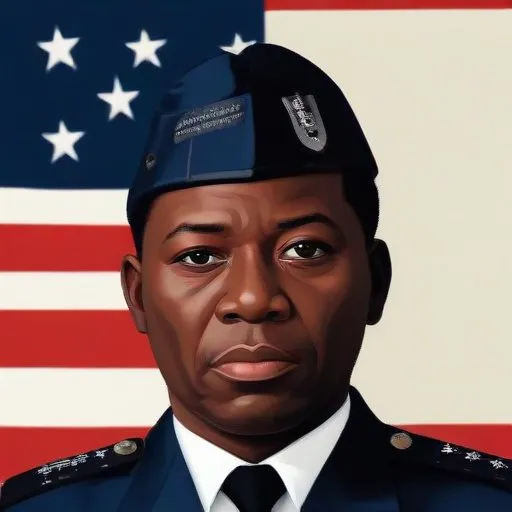
Samuel Doe: The Rise and Fall of Liberia's Controversial Leader
A Turbulent Reign
Samuel Kanyon Doe, a Liberian politician, is known for being the first non-Amrican-Liberian leader of Liberia, overthrowing the True Whig Party's 133-year rule in 1980. Serving as the 21st President of Liberia from 1986 to 1990, Doe's regime was marked by authoritarianism, corruption, and favoritism towards the ethnic Krahns.
Early Life and Military Career
Born on May 6, 1951, in Tuzon, Grand Gedeh County, Doe hails from the Krahn people, an important minority indigenous group. He finished elementary school at the age of 16 and enrolled in a Baptist junior high school in Zwedru. Doe's military career began when he joined the Armed Forces of Liberia (AFL), eventually becoming a master sergeant.
The 1980 Coup and Rise to Power
On April 12, 1980, Doe staged a violent coup d'état, overthrowing President William Tolbert and the True Whig Party. The People's Redemption Council (PRC), a provisional military government, was established, with Doe as the de facto head of state. He became the first Krahn to hold the position, marking the end of Americo-Liberian rule.
Consolidation of Power and Attempts at Legitimacy
In 1984, Doe dissolved the PRC and attempted to legitimize his regime by introducing a new democratic constitution and holding a general election in 1985. Although he won with 51% of the votes, the election was marred by allegations of fraud. Doe's regime received support from the United States due to his anti-Soviet stance during the Cold War.
Economic Reforms and Foreign Investments
Doe's government opened Liberian ports to Canadian, Chinese, and European ships, attracting considerable foreign investment and earning Liberia's reputation as a tax haven. This move led to economic growth, but also fueled corruption and nepotism.
Controversies and Downfall
Doe's authoritarian rule, favoritism towards the Krahns, and human rights abuses led to growing opposition from the Liberian public and the United States. The First Liberian Civil War broke out in December 1989, when the anti-Doe National Patriotic Front of Liberia (NPFL), led by
Charles Taylor, invaded Liberia from the Ivory Coast. Doe was captured and executed by Prince Johnson on September 9, 1990.
Legacy and Impact
Samuel Doe's legacy is marked by controversy and complexity. His rise to power ended 133 years of Americo-Liberian rule, but his regime was characterized by authoritarianism and corruption. Doe's death led to a period of political instability in Liberia, which eventually gave way to a fragile peace.
- Early Life: Born on May 6, 1951, in Tuzon, Grand Gedeh County, Liberia
- Military Career: Joined the Armed Forces of Liberia (AFL) and became a master sergeant
- Rise to Power: Staged a coup d'état in 1980, overthrowing President William Tolbert and the True Whig Party
- Presidency: Served as the 21st President of Liberia from 1986 to 1990
- Downfall: Captured and executed by Prince Johnson on September 9, 1990
Inspirational Quotes
"We will rebuild Liberia, and we will make it a better place for all Liberians."
"The only way forward is to work together and rebuild our nation."
Samuel Doe's quotes reflect his ambition to rebuild Liberia, but his actions ultimately led to chaos and destruction. Despite his flaws, Doe's legacy serves as a reminder of the importance of leadership accountability and the need for inclusive governance.
FAQ
What were the key events during Samuel Does presidency in Liberia?
Samuel Does presidency in Liberia was marked by a brutal suppression of opposition, human rights abuses, and economic mismanagement. He seized power in a military coup in 1980 and ruled until his assassination in 1990.
How did Samuel Doe come to power in Liberia?
Samuel Doe came to power in Liberia through a military coup on April 12, 1980, when he and a group of fellow soldiers overthrew the government of President William R. Tolbert, Jr.
What were the human rights violations under Samuel Does rule?
Under Samuel Does rule, there were widespread human rights violations, including extrajudicial killings, torture, and forced disappearances. His regime was notorious for its brutality and repression of opposition.
What was the impact of Samuel Does presidency on Liberias economy?
Samuel Does presidency had a devastating impact on Liberias economy, with widespread corruption, mismanagement, and looting of the countrys natural resources. The economy was in shambles by the time he was overthrown.
What led to Samuel Does downfall and assassination?
Samuel Does downfall was the result of a combination of internal and external factors, including a devastating civil war, economic collapse, and international pressure. He was assassinated on September 9, 1990, by Prince Y. Johnson, a rebel leader.