


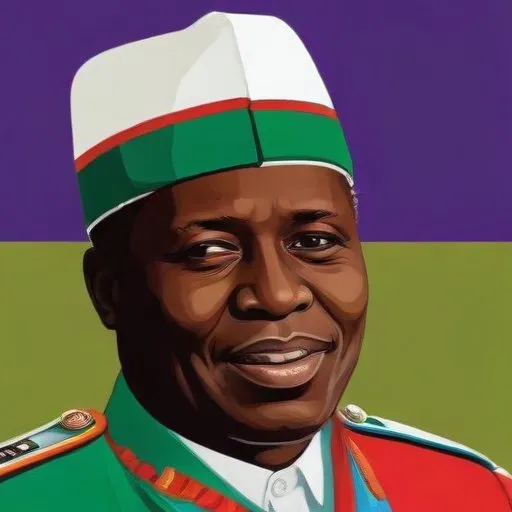
A Gambian military officer who seized power in a 1994 coup and ruled with an iron fist for 22 years, known for his human rights abuses and eccentric behavior.
Yahya Jammeh, the former President of The Gambia, is known for his iron-fisted rule and tumultuous 22-year reign, marked by allegations of human rights abuses, corruption, and authoritarianism. Since taking power in a bloodless coup in 1994, Jammeh's regime was shrouded in controversy, sparking international criticism and isolation.
Born on May 25, 1965, in Kanilai, The Gambia, Jammeh hails from the Jola ethnic group and practices Islam. He attended Gambia High School in Banjul from 1978 to 1983 and later served in the Gambian National Gendarmerie from 1984 to 1989. Commissioned as an officer in the Gambian National Army, Jammeh commanded the Military Police from 1992 to 1994, laying the groundwork for his eventual rise to power.
In July 1994, Jammeh seized power in a bloodless coup, overthrowing the elected government of Sir Dawda Jawara. Initially ruling by decree, he was elected president in 1996, and subsequently re-elected in 2001, 2006, and 2011. However, his presidency was marked by a shift towards authoritarianism, characterized by crackdowns on opposition parties, antigovernment journalists, and LGBT individuals.
Jammeh's foreign policy was marked by a string of controversies, including the withdrawal of The Gambia from the Commonwealth of Nations in 2013 and the International Criminal Court in 2016. The same year, he declared the country an Islamic republic, sparking concerns over human rights and religious freedom. These decisions were later rescinded by his successor government.
Jammeh's regime was marred by allegations of serious human rights violations, including murder, rape, and torture. The Truth, Reconciliation and Reparations Commission's final report highlighted these abuses, leading to Jammeh's exile in Equatorial Guinea. His assets worldwide were frozen amid accusations of embezzling millions of dollars to fund a life of luxury, which he has denied.
Yahya Jammeh's legacy is a complex and controversial one, marked by a mix of authoritarianism, human rights abuses, and corruption. Despite his supporters' arguments that his foreign policy encouraged self-sufficiency and anti-colonialism, his regime was widely criticized by the international community. Today, Jammeh's assets remain frozen, and his future remains uncertain, as the world grapples with the implications of his tumultuous reign.
As the world moves forward, the story of Yahya Jammeh serves as a cautionary tale of the dangers of unchecked power and the importance of upholding human rights and democratic values.
Born in 1924
First president of an African country, leading it to independence from British colonial rule and establishing a democratic government. Known for his efforts to promote economic development and human rights.
