


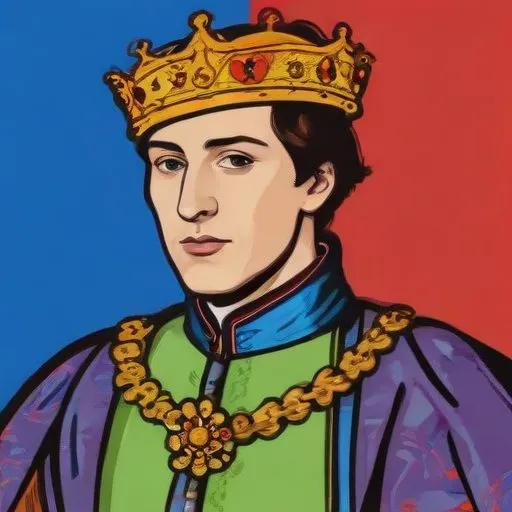
The son and heir of Henry VI, he was the last Lancastrian prince of Wales, and his short life was marked by turmoil and tragedy, ultimately meeting a violent end at the Battle of Tewkesbury. He is remembered as a symbol of the Lancastrian cause and a victim of the Wars of the Roses.
Edward of Westminster, also known as Edward of Lancaster, was the ill-fated son of King Henry VI of England and Margaret of Anjou, whose life was marked by turmoil, power struggles, and ultimately, a tragic demise at the tender age of seventeen.
Born on October 13, 1453, at the Palace of Westminster, London, Edward was invested as Prince of Wales at Windsor Castle in 1454, solidifying his position as the rightful heir to the English throne. However, his life was soon embroiled in the complex web of royal politics and power struggles that would shape his fate.
The rivalry between the Houses of Lancaster and York, known as the War of the Roses, had been simmering for years, with King Henry VI's mental health issues and the Duke of York's claims to the throne fueling the conflict. In 1460, the Duke of York's supporters captured King Henry VI, and Edward's mother, Queen Margaret, was forced to flee with her son to Scotland, where she sought support for her son's claim to the throne.
As the war raged on, Edward's fate became increasingly entwined with the conflicts of the powerful nobles who sought to control the throne. The Duke of York's death at the Battle of Wakefield in 1460 only further embroiled Edward in the struggle, as his mother's enemies sought to crush their opposition. The young prince's life was marked by constant danger, as he was forced to flee from one place to another, seeking safety and support.
The Battle of Tewkesbury in 1471 would ultimately prove to be Edward's undoing. The Lancastrian forces, led by Queen Margaret, were defeated, and Edward was killed in the chaos of the battle. His death marked the end of the Lancastrian claim to the throne and paved the way for the Yorkist dynasty to assume power.
Edward of Westminster's life was a tragic exemplar of the brutal nature of royal politics in medieval England. His fate serves as a poignant reminder of the human cost of power struggles and the devastating consequences of war. Despite his short life, Edward's story continues to captivate historians and enthusiasts alike, offering a glimpse into the treacherous world of royal intrigue and the fleeting nature of power.
Edward of Westminster's life may have been cut short, but his legacy continues to fascinate and draw us into the tumultuous world of medieval politics, reminding us of the human cost of power struggles and the enduring allure of royal intrigue.
Born in 1133
King of England from 1154 to 1189, known for establishing a strong centralized government, reforming the English church, and his tumultuous relationships with Thomas Becket and his sons.
Born in 1430
Wife of King Henry VI of England, she played a significant role in the Wars of the Roses, leading the Lancastrian faction and fighting for her husband's claim to the throne.
