


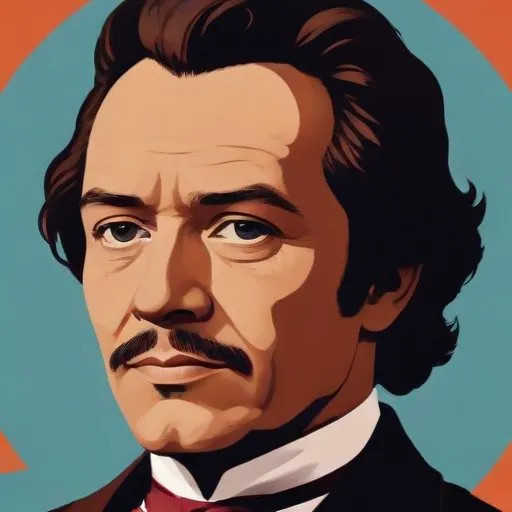
A renowned 19th-century stage actor and generous benefactor, he was celebrated for his powerful performances in Shakespearean roles and his philanthropic efforts in establishing a home for retired actors.
Edwin Forrest, a luminary of the American Shakespearean stage, is best remembered for his scintillating performances and the infamous feud with British actor William Macready, which culminated in the deadly Astor Place Riot of 1849. This tumultuous episode cemented Forrest's place in the annals of theatrical history, casting a long shadow over his otherwise illustrious career.
Born on March 9, 1806, in Philadelphia, Pennsylvania, Forrest was the son of Rebecca (née Lauman) and William Forrest. His father, a Scottish merchant, had relocated to Trenton, New Jersey, before settling in Philadelphia, where he secured a position with the United States Bank. Forrest's mother hailed from an affluent German-American family.
As a young boy, Forrest, along with his brother William, joined a local juvenile thespian club, staging performances in a makeshift woodshed. This early exposure to the world of theatre kindled a passion that would stay with him throughout his life. At the age of 11, Forrest made his professional debut at Philadelphia's South Street Theatre, playing the role of Rosalia de Borgia in the melodrama Rudolph or, The Robbers of Calabria.
Following his father's death in 1819, Forrest attempted to apprentice with a printer, a cooper, and eventually a ship chandler. However, an impromptu performance under the influence of nitrous oxide during a lecture led to an audition at the Walnut Street Theatre, thereby launching his formal stage debut on November 27, 1820, as Young Norval in John Home's Douglas.
Forrest's meteoric rise to fame was largely due to his unique stage presence, which blended raw emotion with technical skill. His performances in Othello, Hamlet, and Macbeth solidified his reputation as a master Shakespearean actor. Forrest's impact on American theatre was profound, paving the way for future generations of actors to excel in the genre.
The rivalry between Forrest and Macready, a British actor, was fueled by nationalistic fervor and artistic differences. The tension between the two actors came to a head during a performance of Macbeth at the Astor Place Opera House in New York City, culminating in a deadly riot on May 10, 1849, which left 22 people dead and many more injured.
Forrest's contributions to American theatre extend far beyond his artistic talent and his infamous feud with Macready. He played a pivotal role in elevating the reputation of American actors, challenging the dominance of British performers on American stages. Forrest's legacy continues to inspire actors, scholars, and enthusiasts alike, serving as a testament to the transformative power of theatre.
Throughout his life, Forrest received numerous accolades and honors for his performances. He was celebrated for his portrayal of King Lear, earning critical acclaim and public admiration. Forrest's later years were marked by a decline in his health and career, but his indelible mark on American theatre remains unshaken.
Forrest's passion for Shakespearean drama was rooted in his deep appreciation for the Bard's exploration of human nature. He believed that theatre possessed the power to ennoble and educate audiences, transcending mere entertainment to become a powerful tool for social commentary.
Forrest's legacy reverberates throughout modern American theatre, influencing generations of actors, playwrights, and directors. His remarkable stage presence and artistic vision continue to inspire new interpretations of Shakespearean classics, ensuring his enduring relevance in the world of theatre.
Edwin Forrest's remarkable life and career serve as a testament to the transformative power of theatre. His legacy continues to inspire and captivate audiences, cementing his place as one of the most influential American actors of the 19th century.
Born in 1833
A renowned 19th-century thespian and theater owner, known for his powerful stage presence and iconic performances, particularly his portrayal of Hamlet. He was also the brother of Abraham Lincoln's assassin, John Wilkes Booth.
Born in 1838
Notorious actor-turned-assassin who fatally shot the 16th President of the United States, Abraham Lincoln, at Ford's Theatre in 1865.
Born in 1838
A renowned Victorian-era actor and theatre manager, known for his powerful stage presence and innovative productions that raised the standards of English theatre.
Born in 1793
A renowned 19th-century thespian and theatre manager, known for his powerful stage presence and innovative productions that elevated the art of acting. He was a pioneer in the development of realism in acting.
Born in 1755
A renowned 18th-century English actress, celebrated for her powerful stage presence and iconic performances in tragic roles, particularly in Shakespearean plays.
