


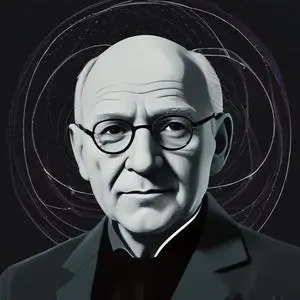
A pioneer in nuclear physics, he discovered elements 93 and 94, neptunium and plutonium, and was awarded the Nobel Prize in Chemistry in 1951.
Edwin McMillan, an American physicist, made history by becoming the first person to produce a transuranium element, neptunium, earning him the 1951 Nobel Prize in Chemistry along with Glenn Seaborg. This groundbreaking achievement marked the beginning of a new era in nuclear physics, and McMillan's contributions to science paved the way for future discoveries.
Born on September 18, 1907, in Redondo Beach, California, McMillan grew up in a family of physicians. His father, Edwin Harbaugh McMillan, and his uncle were both physicians, as were three of his mother's brothers. This exposure to the medical field might have influenced McMillan's interest in science from an early age.
McMillan attended the California Institute of Technology, where he earned his bachelor's degree. He then went on to pursue his doctorate at Princeton University, graduating in 1933. This strong academic foundation laid the groundwork for his future research endeavors.
McMillan's research career began at the Berkeley Radiation Laboratory, where he discovered oxygen-15 and beryllium-10. During World War II, he worked on microwave radar at the MIT Radiation Laboratory and later on sonar at the Navy Radio and Sound Laboratory.
In 1942, McMillan joined the Manhattan Project, a secretive research and development project that aimed to create atomic bombs. At Los Alamos Laboratory, he led teams working on the gun-type nuclear weapon design and contributed to the development of the implosion-type nuclear weapon.
After the war, McMillan returned to the Berkeley Radiation Laboratory, where he co-invented the synchrotron with Vladimir Veksler. He was appointed associate director of the laboratory in 1954 and promoted to deputy director in 1958. Following the death of Ernest Lawrence, the laboratory's founder, McMillan became the director, a position he held until his retirement in 1973.
McMillan's most notable accolade was the 1951 Nobel Prize in Chemistry, which he shared with Glenn Seaborg for their discovery of neptunium. This recognition cemented his status as a pioneer in the field of nuclear physics.
McMillan's nephew, John Clauser, won the Nobel Prize in Physics in 2022, making him a part of a unique family legacy in the scientific community.
Edwin McMillan's contributions to nuclear physics have had a lasting impact on the scientific community. His discovery of neptunium paved the way for further research into transuranium elements, and his work on the Manhattan Project helped shape the course of modern warfare. Today, McMillan is remembered as a pioneering physicist who expanded our understanding of the atomic world.
Born in 1901
Invented the cyclotron, a type of particle accelerator, revolutionizing nuclear physics and paving the way for major breakthroughs in medicine, energy, and materials science.
Born in 1901
A pioneer in nuclear physics, known for leading the team that developed the first nuclear reactor and playing a crucial role in the development of the atomic bomb.
Born in 1918
A brilliant physicist and engineer who pioneered quantum mechanics and famously explained complex concepts in simple terms, making science accessible to all.
Born in 1904
Leading the development of the atomic bomb during World War II, this brilliant mind made groundbreaking contributions to theoretical physics, pushing the boundaries of human understanding.
Born in 1912
A renowned chemist and academic who discovered and isolated ten transuranic elements, including plutonium, and was a leading figure in the development of nuclear energy. His work had a profound impact on our understanding of the periodic table and the properties of atomic nuclei.
Born in 1908
Developed the hydrogen bomb and was a key figure in the development of the US nuclear program, known for his advocacy of nuclear energy and his role in the Cold War.
Born in 1895
A Soviet physicist who developed the concept of the "tokamak," a device used to confine and study plasmas at extremely high temperatures, leading to advancements in nuclear fusion research.
