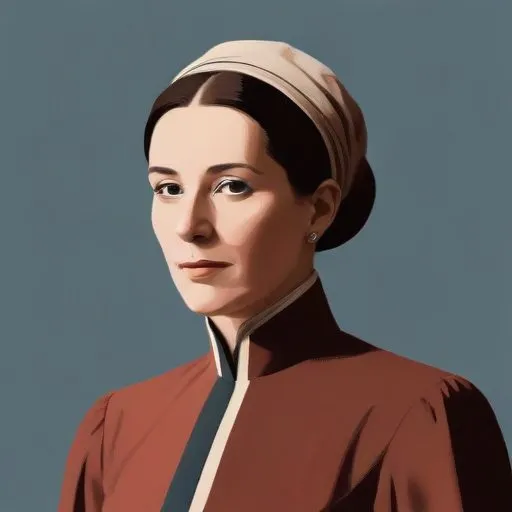
Elfrida Andre: The Trailblazing Swedish Composer and Conductor
A Pioneer in Scandinavian Music
Elfrida Andre was a Swedish organist, composer, and conductor who broke barriers in the male-dominated world of Scandinavian music. She was the first woman to be officially appointed as an organist in Scandinavia and went on to become a renowned composer and conductor, leaving an indelible mark on the musical landscape of her time.
Early Life and Career
Born on February 19, 1841, in Visby, Sweden, Andre was the daughter of Dr. Andreas Andre. She began her musical journey as a pupil of Ludvig Norman and Niels Wilhelm Gade, two prominent Swedish musicians. Her sister, Fredrika Stenhammar, was a soprano opera singer, and the two sisters often performed together.
A Career of Firsts
Andre's career was marked by a series of firsts. In 1861, she became the first woman to work as an organist in Stockholm, and six years later, she was appointed as the organist at Gothenburg Cathedral, a position she held until her death. This appointment was a significant milestone, as it marked the first time a woman had been officially recognized as an organist in Scandinavia.
Andre's accomplishments did not stop there. In 1897, she became the first Swedish woman to conduct a symphony orchestra, leading the Gothenburg Workers Institute Concerts to critical acclaim.
Compositions and Legacy
Andre was a prolific composer, and her works include two organ symphonies, an opera, several orchestral pieces, chamber music, and choral works. Her music is characterized by its technical skill and emotional depth, and her two organ symphonies remain popular to this day.
- Her opera, Fritiofs saga, was premiered in 1899 and features a libretto by Selma Lagerlöf.
- Her piano quintet in E minor, published in 1865, is considered one of her most important works.
- Her string quartet in D minor, composed in 1861, demonstrates her mastery of chamber music.
Awards and Recognition
Andre's contributions to music were recognized during her lifetime. She was awarded the Litteris et Artibus award in 1895 and the Idun Women's Academy Fellowship in 1908. She was also elected to the Royal Swedish Academy of Music, a prestigious honor that acknowledged her achievements as a composer and conductor.
Legacy and Impact
Elfrida Andre's legacy extends far beyond her music. She was a trailblazer for women in music, paving the way for future generations of female composers and conductors. Her determination and talent inspired countless women to pursue careers in music, and her contributions to Scandinavian music are still celebrated today.
Andre's music continues to be performed and recorded, and her compositions remain an integral part of Sweden's cultural heritage. Her legacy serves as a testament to her innovative spirit and her unwavering dedication to her craft.
Conclusion
Elfrida Andre was a true pioneer in the world of Scandinavian music. Her remarkable career, marked by numerous firsts and achievements, has left an enduring impact on the musical landscape of Sweden and beyond. As a composer, conductor, and activist, Andre continues to inspire generations of musicians and music lovers alike.
FAQ
What was Elfrida Andrées contribution to the development of Swedish music?
Elfrida Andrée was a pioneering Swedish organist, composer, and conductor who made significant contributions to the development of Swedish music. She was one of the first women to compose and conduct large-scale works, and her music often featured Swedish folk melodies and themes.
What was Elfrida Andrées approach to composition and performance?
Elfrida Andrées approach to composition and performance was centered on the idea of promoting Swedish music and culture. She was known for her innovative compositions, which often featured unusual instrumentation and harmonies, and her performances were highly acclaimed for their technical skill and emotional depth.
What was Elfrida Andrées significance in the development of womens roles in music?
Elfrida Andrée was a key figure in the development of womens roles in music, and she paved the way for future generations of women composers and performers. She was one of the first women to hold prominent positions in music, including as organist and conductor of the Göteborg Orchestra.
What was Elfrida Andrées relationship with other prominent musicians of her time?
Elfrida Andrée was a prominent figure in the musical community of her time, and she had relationships with other prominent musicians, including Wilhelm Stenhammar and Hugo Alfvén. She was also a member of several musical societies and organizations, and she contributed to the development of music education and research in Sweden.
What is Elfrida Andrées legacy in the field of music?
Elfrida Andrées legacy in the field of music is significant, and she is still remembered as one of the most important Swedish composers and performers of the late 19th and early 20th centuries. Her contributions to the development of Swedish music, womens roles in music, and music education continue to influence music today.