


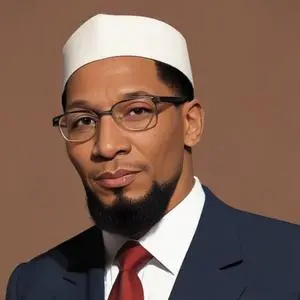
Leader of the Nation of Islam, promoting black empowerment and separatism through a unique blend of Islam and black nationalism. Known for his controversial teachings and influence on prominent figures like Malcolm X.
Elijah Muhammad, born Elijah Robert Poole, was an American religious leader, black separatist, and self-proclaimed Messenger of Allah who led the Nation of Islam (NOI) from 1933 until his death in 1975. He is best known for his teachings of black power, pride, economic empowerment, and racial separation, which resonated with many African Americans during a time of great social unrest.
Born on October 7, 1897, in Sandersville, Georgia, Elijah Muhammad grew up in a family of 13 children. He dropped out of school in the third grade and later moved to Detroit, Michigan, where he worked in factories and restaurants. It was during this time that he became fascinated with the teachings of Wallace Fard Muhammad, the founder of the Nation of Islam.
In the 1930s, Muhammad formally established the Nation of Islam, which promoted black self-sufficiency and self-reliance over integration. Under his leadership, the group grew from a small, local black congregation into an influential nationwide movement. He was unique in his embrace of both black nationalism and pan-Africanism, with traditional Islamic themes.
Muhammad taught that Master Fard Muhammad is the Son of Man of the Bible, and after Fard's disappearance in 1934, Muhammad assumed control over Fard's former ministry. He promoted the idea that African Americans should return to their African homeland and establish their own separate nation. His views on race and his call for blacks having an independent nation for themselves made him a controversial figure, both within and outside the Nation of Islam.
Muhammad's teachings and ideas had a significant impact on modern society. He inspired many prominent figures, including Malcolm X, Louis Farrakhan, Muhammad Ali, and his son, Warith Deen Mohammed. His emphasis on black pride, economic empowerment, and self-reliance continues to resonate with many African Americans today.
Muhammad's views on race and his call for blacks having an independent nation for themselves were highly controversial. He was often criticized for his black supremacist views and his rejection of the civil rights movement. However, his followers saw him as a champion of black pride and a leader who fought for the rights of African Americans.
Elijah Muhammad's legacy is complex and multifaceted. While his views on race were controversial, he also inspired a generation of African Americans to take pride in their heritage and fight for their rights. His emphasis on black self-sufficiency and self-reliance continues to resonate with many today.
After his death, his son, Warith Deen Mohammed, took over as the leader of the Nation of Islam and eventually transformed the organization into the World Community of al-Islam in the West, which later became the American Society of Muslims.
Elijah Muhammad's life and teachings continue to be a subject of debate and discussion among scholars, historians, and the general public. Regardless of one's views on his ideas, it is clear that he played a significant role in shaping African American identity and continues to be an important figure in American history.
Born in 1925
A prominent figure in the Civil Rights Movement, advocating for African American rights and self-defense, and a powerful orator who inspired a generation.
97 Years Old
A prominent leader in the civil rights movement, advocating for racial equality and social justice through nonviolent means, leaving a lasting impact on American history.
93 Years Old
Leader of the Nation of Islam, promoting black empowerment and self-sufficiency, while also sparking controversy with anti-Semitic and homophobic remarks. 42
85 Years Old
A prominent figure in the Civil Rights Movement, advocating for Black Power and self-defense, and famously coining the term "Black Power" in 1966. Known for his radical approach to achieving racial equality.
84 Years Old
Co-founder of the Black Panther Party, a revolutionary socialist organization that advocated for African American empowerment and challenged police brutality in the 1960s and 1970s. Known for his charismatic leadership and radical ideology.
89 Years Old
Co-founder of the Black Panther Party, a radical organization that fought for African American rights and empowerment in the 1960s and 1970s, known for his activism and leadership during a tumultuous period in American history.
82 Years Old
A prominent civil rights activist, academic, and author who has been a vocal advocate for racial and gender equality, and an icon of black feminism. Known for her work on prison reform and her involvement in the Black Panther Party.
78 Years Old
The chairman of the Illinois chapter of the Black Panther Party, a charismatic leader who advocated for racial equality and social justice through community empowerment and political activism. He's most known for his impassioned speeches and radical approach to fighting systemic racism.
