


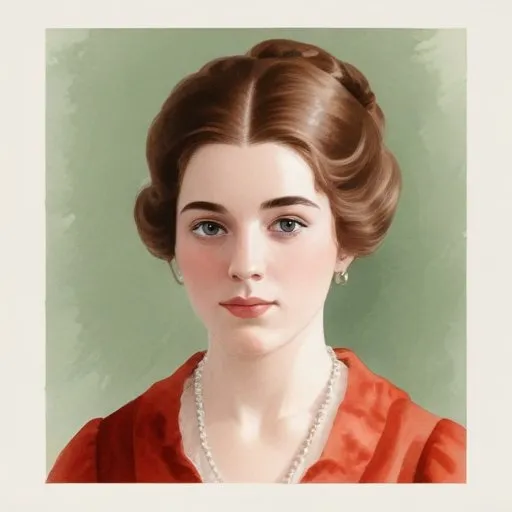
French aristocrat and fashionista, known for her beauty, extravagant lifestyle, and scandalous love affairs that captivated 18th-century European high society.
Eliza Courtney, born on February 20, 1792, is famously known as the illegitimate daughter of Charles Grey, 2nd Earl Grey, a future Prime Minister of the United Kingdom, and Georgiana Cavendish, Duchess of Devonshire, a renowned socialite. This unique parentage led to a life of secrecy and hidden relationships, which wouldn't be exposed until much later.
Born in Aix-en-Provence, France, Eliza was swiftly taken to Fallodon, Northumberland, in northern England, where she was raised by her paternal grandparents, Charles Grey, 1st Earl Grey, and Elizabeth Grey. This arrangement was necessitated by the scandalous nature of her birth, as her mother, Georgiana, was already married to William Cavendish, 5th Duke of Devonshire.
Although Georgiana couldn't publicly acknowledge Eliza, she would secretly visit her daughter whenever possible. Two anguished poems written by Georgiana to Eliza have survived, giving a glimpse into the emotions of a mother forced to keep her child a secret.
Eliza's surname, Courtney, was derived from her great-uncle William Poyntz, who married Isabella Courtney, sister and co-heiress of Charles Courtney, the last of the West Country family of Courtney of Trethurfe and Courtney of Tremeer. This surname, extinct since 1761, was revived through Eliza's family connection.
Eliza named her firstborn daughter Georgiana, a testament to her mother's enduring influence. Her maternal aunt, Henrietta Ponsonby, Countess of Bessborough, was unaware of their familial connection when she visited the Greys in 1808. Henrietta was dismayed by Eliza's situation, noting the young girl's "look of mortification" and her being "thrown into the background."
Eliza Courtney's existence highlights the societal pressures and moral expectations of the late 18th and early 19th centuries. As the illegitimate child of a prominent politician and a high-society figure, her life serves as a poignant reminder of the consequences of secrecy, power, and family obligations.
