


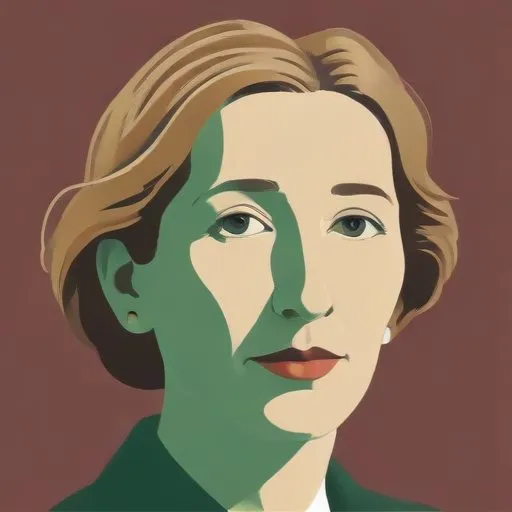
A renowned Anglo-Irish writer and critic, celebrated for her nuanced and psychologically complex novels of manners, exploring the intricacies of relationships and social class. Her works often blended realism with subtle hints of the supernatural.
Irish-British novelist and short story writer Elizabeth Bowen is renowned for her poignant portrayals of life in wartime London and her nuanced depictions of the Big House of Irish landed Protestants. Through her works, Bowen masterfully captured the essence of a bygone era, weaving intricate narratives that continue to captivate readers to this day.
Born on June 7, 1899, in Dublin, Ireland, Bowen was the daughter of barrister Henry Charles Cole Bowen and Florence Isabella Pomeroy. Her family's Welsh origins and ancestral ties to the Irish gentry deeply influenced her writing, imbuing it with a sense of history and tradition.
Following her mother's death in 1912, Bowen was raised by her aunts in England, where she developed a passion for art and writing. Her early education at Downe House School and later at art school in London laid the foundation for her literary career.
Bowen's literary debut, Encounters (1923), a collection of short stories, was facilitated by her friend and fellow writer Rose Macaulay. This marked the beginning of a prolific career that would span over five decades and yield numerous novels, short stories, and essays.
Some of her notable works include The Hotel (1927), The Last September (1929), and Afternoon in North Africa (1951). These novels showcase Bowen's remarkable ability to capture the subtleties of human relationships, the passage of time, and the complexities of war-torn London.
Bowen's marriage to Alan Cameron in 1923 was described as a "sexless but contented union." The marriage reportedly remained unconsummated, and Bowen went on to have various extramarital relationships, including a thirty-year affair with Charles Ritchie, a Canadian diplomat.
Throughout her life, Bowen maintained a strong connection with her Irish heritage, often spending summers at her family's ancestral home, Bowens Court, in County Cork.
Bowen's works not only offer a window into the past but also provide valuable insights into the human experience, love, and relationships. Her writing has inspired generations of writers, including Graham Greene and Angela Carter.
In recognition of her contributions to literature, Bowen was appointed a Commander of the Order of the British Empire (CBE) in 1948. Her legacy continues to captivate readers and inspire new generations of writers.
Bowen's writing often explored the complexities of human nature, morality, and the fragility of life. Through her works, she conveyed a deep understanding of the human condition, revealing the intricacies of relationships and the power of love.
Her writing also touches on the theme of displacement, reflecting her own experiences as an Anglo-Irish writer straddling two cultures.
Bowen's life and works are deeply intertwined with the historical context of her time. Her writing reflects the turmoil of World War II, the decline of the Anglo-Irish aristocracy, and the emergence of a new social order.
As a chronicler of her era, Bowen's works offer a unique perspective on the 20th century, providing a valuable contribution to the literary canon.
In conclusion, Elizabeth Bowen's remarkable life and works continue to captivate readers with their nuanced portrayals of love, relationships, and the human experience. Her legacy as a chronicler of wartime London and the Irish gentry remains unparalleled, ensuring her place as one of the most beloved and respected writers of the 20th century.
94 Years Old
A glamorous and talented actress who dazzled audiences with her iconic film roles and dedication to charitable causes.
Born in 1919
A renowned author and philosopher who explored the human condition through novels and philosophical works, delving into themes of morality, love, and existence.
Born in 1924
Romantic novelist celebrated for her heartwarming, feel-good stories of love, family, and relationships, often set in idyllic English countryside settings.
Born in 1904
Witty and insightful writer of novels and essays that satirize the British aristocracy, particularly in her iconic novel "The Pursuit of Love".
Born in 1903
A renowned English writer, known for his witty satires and novels of manners, particularly "Brideshead Revisited", which explores the British aristocracy's decline.
Born in 1905
A modernist novelist celebrated for his innovative, lyrical prose and exploration of the human condition, often focusing on the British upper class.
Born in 1905
A British novelist and critic, best known for his 12-volume series "A Dance to the Music of Time", a sprawling, witty, and insightful chronicle of British upper-class life from the 1920s to the 1970s.
Born in 1892
A renowned author, poet, and gardener, celebrated for her lyrical writings and innovative gardening style, which continues to inspire literary and horticultural enthusiasts alike.
