


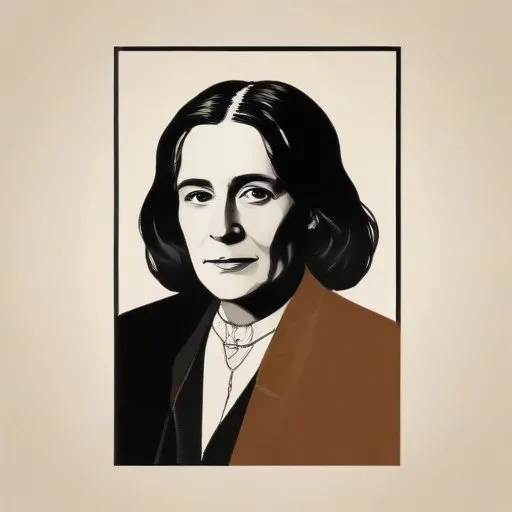
Wrote influential children's books and educational materials that promoted moral values and social responsibility. Her works were widely read and respected during the 19th century.
Elizabeth Louisa Foster Mather was a prominent American evangelist and missionary of the 19th century, known for her tireless efforts in spreading the teachings of Christianity to the masses. She was a prolific writer, a passionate speaker, and a dedicated philanthropist who left an indelible mark on the world of Christian missions.
Born on August 11, 1814, in Utica, New York, Elizabeth was the daughter of a devout Christian family. She grew up in a household that instilled in her the importance of faith and service to humanity. Her early life was marked by a series of personal struggles, including the loss of her father at a young age. However, it was during this period of turmoil that she experienced a profound spiritual awakening, which would shape the course of her life.
Elizabeth's calling as a missionary began in the 1840s, when she and her husband, William Mather, established a mission in the Michigan Territory. Over the next several decades, she dedicated herself to spreading the Gospel to Native American communities, African Americans, and immigrants. Her work took her to various parts of the United States, including the West Coast, where she ministered to settlers and Native Americans during the California Gold Rush.
Elizabeth was a prolific writer, and her literary contributions include several books, pamphlets, and articles that aimed to inspire and educate Christians. Her most notable works include Sketches of Christian Heroes, The Gospel in Tennessee, and Ruth and Her Mother, which offered valuable insights into Christian living and missionary work.
Elizabeth's missionary work was guided by her unwavering faith in the power of Christianity to transform lives. She believed in the importance of education, women's empowerment, and social reform, which she saw as essential to the spread of Christianity. Her philosophical contributions lie in her emphasis on the role of women in Christian ministry and her commitment to serving marginalized communities.
Elizabeth Louisa Foster Mather's legacy extends far beyond her own lifetime. Her work as a missionary, writer, and philanthropist has inspired generations of Christians to pursue careers in ministry and social service. Her commitment to education and women's empowerment has paved the way for women to take on leadership roles in the church and society. Today, she is remembered as a pioneer in Christian missions, a passionate evangelist, and a devoted servant of God.
As we reflect on Elizabeth's remarkable life, we are reminded of her own words: "To live is to labor; to labor is to love; to love is to live." Her life was a testament to the power of faith and service, and her legacy continues to inspire us to make a difference in the world.
"The best way to spread the Gospel is to live it."
"Christians are not called to be comfortable, but to be contagious."
Elizabeth Louisa Foster Mather was posthumously inducted into the Evangelical Hall of Fame in 2003, recognizing her pioneering work in Christian missions and ministry.
Elizabeth's life and work must be understood within the context of 19th-century America, a time marked by westward expansion, social reform, and growing urbanization. Her contributions to Christian missions and women's empowerment during this period have had a lasting impact on American history and Christian ministry. Today, her legacy serves as a powerful reminder of the importance of faith, service, and compassion in our lives.
Born in 1803
A leading figure in the Transcendentalist movement, he advocated for individualism, self-reliance, and nature-inspired spirituality through his essays and poetry. His ideas continue to influence American thought and culture.
Born in 1817
A 19th-century thinker who advocated for simple living, civil disobedience, and individualism, inspiring generations to reevaluate their relationship with nature and society.
Born in 1804
Author of dark, psychologically complex tales that explore the human condition, often set in 17th-century New England, and known for his masterpiece "The Scarlet Letter".
Born in 1819
Author of epic sea tales and philosophical explorations, including the iconic "Moby-Dick", which continues to influence literature and popular culture.
Born in 1819
Pioneering poet and songwriter credited with writing the "Battle Hymn of the Republic", a powerful anthem that became a rallying cry for the Union during the American Civil War.
Born in 1811
Wrote influential abolitionist novels, including "Uncle Tom's Cabin", which humanized the horrors of slavery and fueled the anti-slavery movement.
Born in 1832
Wrote novels and poems that explored themes of family, love, and social justice, most famously "Little Women", a timeless coming-of-age story.
