


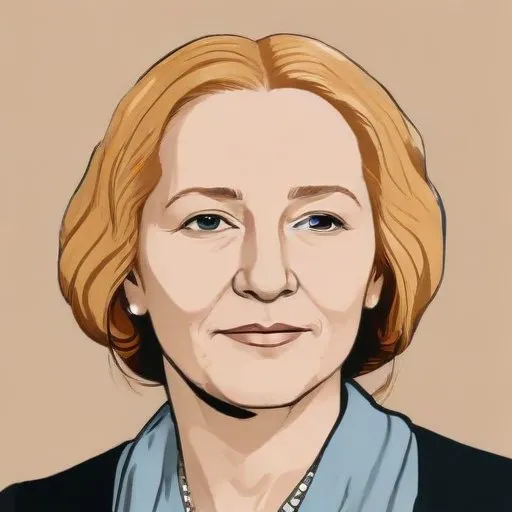
Pioneering poet and songwriter credited with writing the "Battle Hymn of the Republic", a powerful anthem that became a rallying cry for the Union during the American Civil War.
Julia Ward Howe is best known for penning the iconic "Battle Hymn of the Republic," a rallying cry for the Union during the American Civil War. But her contributions to American history extend far beyond this single masterpiece, encompassing a lifetime of advocacy for abolition, women's suffrage, and social reform.
Born on May 27, 1819, in New York City, Julia Ward was the fourth of seven children to Samuel Ward III, a successful Wall Street stockbroker and strict Calvinist Episcopalian. Her mother, Julia Rush Cutler Ward, was a poet and descendant of Francis Marion, the legendary "Swamp Fox" of the American Revolution. Julia's early life was marked by tragedy, with her mother's death in childbirth when she was just five years old.
Despite this loss, Julia received a rich education, tutored by private instructors and attending schools for young ladies until the age of sixteen. Her elder brother Samuel Cutler Ward's extensive library, filled with works contradicting her father's Calvinistic views, sparked her intellectual curiosity and fostered a lifelong love of learning.
Julia's social standing and literary talents soon gained her access to the highest echelons of Boston society. She rubbed shoulders with luminaries like Charles Dickens, Charles Sumner, and Margaret Fuller, whose influence would shape her future writing and activism.
Her 1843 marriage to Samuel Gridley Howe, a physician and reformer who founded the Perkins School for the Blind, further solidified her position as a leading lady of Boston's intellectual circle. Though Samuel was eighteen years her senior and had previously courted her sister Louisa, their union would produce six children and last until his death in 1876.
Julia Ward Howe's writing spanned multiple genres, from poetry and drama to essays and travelogues. Her 1854 collection, Passion-Flowers, showcased her lyrical talent and exploring themes of love, nature, and social justice.
However, it was her 1861 composition, "Battle Hymn of the Republic," that catapulted her to national fame. Set to the tune of "John Brown's Body," this powerful anthem galvanized the Union cause and remains an American classic to this day.
A fierce advocate for women's rights and abolition, Julia Ward Howe championed these causes through her writing and public speaking. Her 1870 "Mothers' Day Proclamation," an impassioned plea for international disarmament and maternal solidarity, foreshadowed the modern Mothers' Day holiday.
Throughout her life, Julia worked tirelessly to promote education, women's suffrage, and social justice, often in the face of intense criticism and personal hardship. Her unwavering commitment to these principles earned her the admiration of contemporaries and cemented her legacy as a pioneering American feminist.
Julia Ward Howe's contributions extend far beyond her literary achievements, influencing generations of Americans to strive for a more just and equitable society. Her steadfast advocacy for women's rights, abolition, and social reform paved the way for future generations of activists and writers.
Today, Julia Ward Howe is remembered as a beacon of hope and determination, her life and work an enduring testament to the power of art and activism in shaping American history.
Julia Ward Howe's remarkable life and work continue to inspire Americans today, a testament to the transformative power of art, activism, and unwavering dedication to social justice.
Born in 1830
A reclusive poet who crafted innovative, enigmatic, and emotionally charged verse that continues to captivate readers with its unique style and profound insights.
Born in 1803
A leading figure in the Transcendentalist movement, he advocated for individualism, self-reliance, and nature-inspired spirituality through his essays and poetry. His ideas continue to influence American thought and culture.
Born in 1817
A 19th-century thinker who advocated for simple living, civil disobedience, and individualism, inspiring generations to reevaluate their relationship with nature and society.
Born in 1819
A celebrated poet, essayist, and journalist who revolutionized American literature with his collection "Leaves of Grass", known for his free verse style and celebration of the human spirit.
Born in 1832
Wrote novels and poems that explored themes of family, love, and social justice, most famously "Little Women", a timeless coming-of-age story.
Born in 1835
Witty writer of classics like "The Adventures of Tom Sawyer" and "The Adventures of Huckleberry Finn", known for humor and social commentary.
Born in 1811
Wrote influential abolitionist novels, including "Uncle Tom's Cabin", which humanized the horrors of slavery and fueled the anti-slavery movement.
Born in 1809
A master of dark and atmospheric storytelling, crafting haunting tales of mystery and horror that continue to captivate readers to this day.
