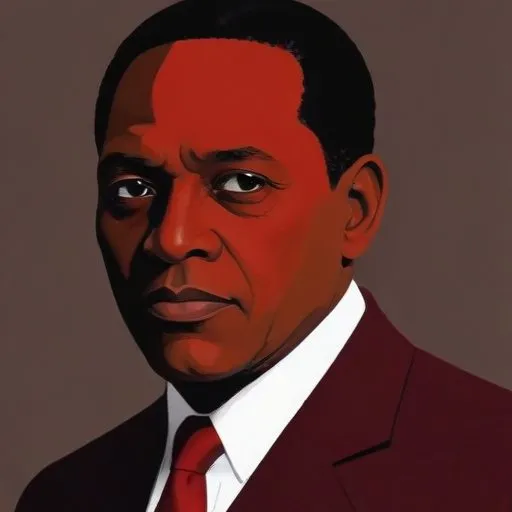
Sir Ellis Emmanuel Innocent Clarke: The Architect of Trinidad and Tobago's Independence
A Life of Dedicated Public Service
Sir Ellis Clarke is celebrated as the first President of Trinidad and Tobago and the second and last Governor-General, playing a pivotal role in shaping the country's 1962 Independence constitution. As a distinguished statesman, he devoted his life to public service, leaving an indelible mark on Trinidad and Tobago's history.
Early Life and Education
Born on December 28, 1917, Clarke attended Saint Mary's College, where he excelled in mathematics, earning an Island Scholarship in 1938. He then pursued his higher education at University College London, University of London, graduating with a Bachelor of Law degree and being called to the bar at Grays Inn.
Rise to Prominence
Clarke's meteoric rise in the political sphere began in 1954, when he was appointed Solicitor-General, followed by his tenure as Deputy Colonial Secretary from 1956 to 1957. His dedication and expertise earned him the position of Attorney-General from 1957 to 1962. During this period, he played a crucial role in drafting Trinidad and Tobago's Independence constitution.
Ambassadorial Roles and Presidential Tenure
After Trinidad and Tobago gained independence in 1962, Clarke served as Ambassador to the United States, Canada, and Mexico, as well as the Permanent Representative to the United Nations. In 1972, he succeeded Sir Solomon Hochoy as Governor-General. When Trinidad and Tobago transitioned to a republic in 1976, Clarke was unanimously elected as the country's first President by the electoral college, a position he held until 1987.
Awards and Honors
Clarke's exceptional service was recognized with several prestigious awards, including his investiture as a Companion of St Michael and St George by Queen
Elizabeth II in 1960. In 1972, he was knighted as a Knight Grand Cross of the same order.
Personal Life and Legacy
Clarke was married to Lady Ermyntrude Clarke (1921-2002) for almost fifty years, with whom he had three children: Peter Ellis Clarke, Margaret Clarke, and Christine Clarke. Despite his decision not to seek a third presidential term, Clarke's commitment to Trinidad and Tobago remained unwavering. He will always be remembered as a champion of his country's independence and a devoted public servant.
In the words of Sir Ellis Clarke, "We must strive to build a nation where every citizen has the opportunity to develop his full potential, where every citizen can live in peace and harmony with his fellow men, and where Trinidad and Tobago can take its rightful place among the community of nations."
FAQ
What were Ellis Clarkes political achievements?
Ellis Clarke served as the 1st President of Trinidad and Tobago, playing a crucial role in the countrys transition to independence and development.
How did Ellis Clarke get involved in politics?
Ellis Clarke began his political career as a lawyer and judge, before entering politics and serving in various government roles.
What was Ellis Clarkes role in Trinidad and Tobagos independence?
Ellis Clarke was a key figure in Trinidad and Tobagos struggle for independence, serving as a member of the negotiation team and later as President.
What awards did Ellis Clarke receive for his contributions to politics?
Ellis Clarke was awarded the Trinity Cross, the highest national honor in Trinidad and Tobago, for his contributions to the countrys development.
What was Ellis Clarkes legacy beyond politics?
Ellis Clarkes legacy extends beyond politics, as a dedicated public servant and champion of social justice, he made a lasting impact on Trinidadian society.