


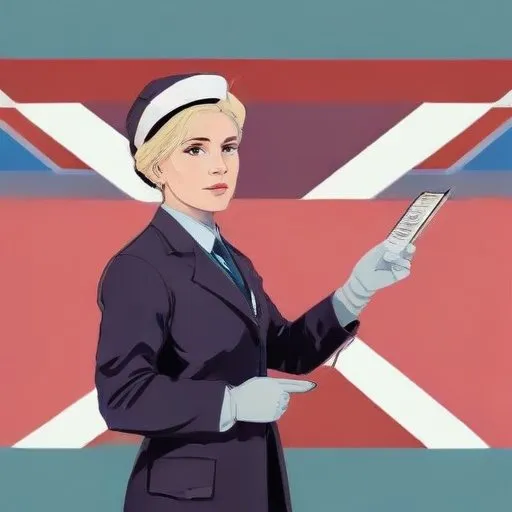
A pioneering female surgeon who founded hospitals and medical units during World War I, and a passionate advocate for women's right to vote.
Elsie Inglis was a Scottish medical doctor, surgeon, and teacher who made history as the founder of the Scottish Women's Hospitals, a pioneering organization that provided medical aid to women during World War I. She was also a vocal suffragist, fighting tirelessly for women's right to vote.
Born on August 16, 1864, in Naini Tal, British India, Elsie Inglis was the second daughter and third youngest of eight siblings. Her parents, Harriet Lowes Thompson and John Forbes David Inglis, were a magistrate and a civil servant, respectively, and valued education for both their sons and daughters. Elsie's early years were spent in India, where she was schooled alongside her siblings.
After her father's retirement, Elsie moved to Edinburgh, where she pursued her passion for medicine. She enrolled in the Edinburgh School of Medicine for Women in 1887, founded by Dr. Sophia Jex-Blake, and began her studies. Inglis's decision to study medicine was influenced by her experiences nursing her mother during her final illness.
Elsie Inglis's career was marked by several milestones. She was the first woman to hold the Serbian Order of the White Eagle, a prestigious honor awarded for her humanitarian work during World War I. She also founded the Scottish Women's Hospitals, a network of medical units that provided aid to women and children in war-torn countries.
In addition to her medical career, Inglis was an ardent suffragist. She believed that women's participation in the medical profession was closely tied to their fight for equal rights. Her work with the Scottish Women's Hospitals was not only a testament to her medical prowess but also a powerful symbol of women's capabilities.
Inglis's remarkable work did not go unnoticed. She was awarded the Serbian Order of the White Eagle, the highest honor given to foreigners, and was also recognized by the Scottish government for her contributions to medicine and women's rights.
Elsie Inglis's trailblazing career paved the way for generations of women in medicine. Her legacy extends beyond her medical achievements to her tireless advocacy for women's rights and her unwavering commitment to humanitarian causes. Her story serves as a powerful inspiration to anyone who has ever felt the urge to challenge convention and push boundaries.
Elsie Inglis's remarkable life and legacy continue to inspire and motivate people around the world. Her pioneering spirit, compassion, and dedication to her craft have left an indelible mark on the world of medicine and beyond.
Born in 1840
Pioneering female physician who fought for women's rights to attend medical school, becoming one of the first women to earn a medical degree in the UK. She paved the way for future generations of female doctors.
Born in 1836
Pioneering female physician and politician who broke gender barriers in medicine and politics, becoming the first woman to achieve several notable milestones.
Born in 1820
Pioneering nurse and statistician who revolutionized healthcare by introducing sanitation practices and data-driven decision making, becoming the founder of modern nursing.
Born in 1865
A British nurse who helped soldiers from both sides during WWI, and was executed by the Germans for treason, becoming a symbol of courage and compassion.
