


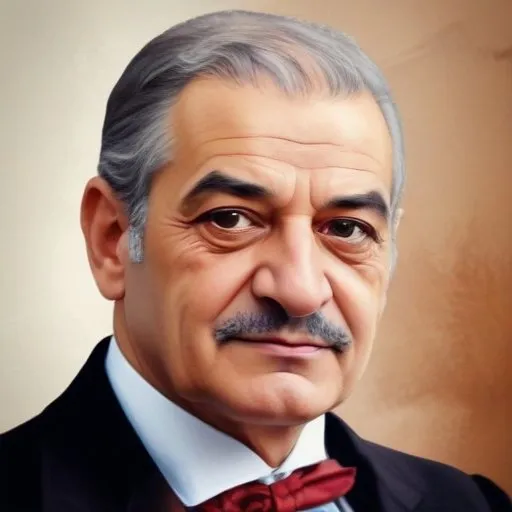
A German-Jewish Egyptian physician and politician who explored Africa, served as Governor of Equatoria, and wrote influential books on African geography and ethnology. He played a key role in the Scramble for Africa.
Emin Pasha, born Isaak Eduard Schnitzer, was a German Jewish physician, naturalist, and governor of the Egyptian province of Equatoria on the upper Nile, renowned for his extraordinary career and contributions to the Ottoman Empire.
Born on March 28, 1840, in Oppeln, Poland (now Opole), Emin Pasha belonged to a middle-class German Jewish family. After his father's death in 1845, his mother married a Christian, and the family was baptized Lutherans. Emin pursued his education at the Kolegium Carolinum in Neisse, Poland, and later at universities in Breslau, Knigsberg, and Berlin, where he qualified as a physician in 1864.
Disqualified from medical practice in Germany, Emin Pasha left for Constantinople to enter Ottoman service. He traveled via Vienna and Trieste, stopping in Antivari, Montenegro, where he began practicing medicine and learned Turkish, Albanian, and Greek languages. He later became the quarantine officer of the port and joined the staff of Ismail Hakki Pasha, governor of northern Albania, traveling extensively throughout the Ottoman Empire.
After Hakki Pasha's death in 1873, Emin returned to Neisse with the pasha's widow and children, claiming them as his own family. However, he left suddenly in 1875 and reappeared in Cairo, eventually departing for Khartoum, where he adopted the name Mehemet Emin and started a medical practice. In Khartoum, he began collecting plants, animals, and birds, sending many specimens to European museums.
In 1878, Emin Pasha was appointed governor of the Egyptian province of Equatoria on the upper Nile by the Ottoman Empire. He worked tirelessly to develop the region, establishing a successful administration, promoting trade, and fostering good relations with local tribes. His governance earned him the respect of both the Ottoman authorities and the local population.
Emin Pasha's passion for natural history led him to collect numerous specimens of plants, animals, and birds during his travels. He sent many of these specimens to European museums, including the Berlin Museum of Natural History, where they are still preserved today. His contributions to the field of natural history are still recognized and appreciated by scholars.
In 1886, the Ottoman Empire conferred the title Pasha on Emin, and he was henceforth known as Emin Pasha. His remarkable career and achievements earned him recognition from European powers, including the British, who praised his efforts in Equatoria. Although his life was marked by controversy and intrigue, Emin Pasha's legacy as a physician, naturalist, and governor remains an important chapter in the history of the Ottoman Empire.
Emin Pasha's life was marked by controversy, including allegations of impersonation and deception. However, his remarkable achievements and contributions to the Ottoman Empire and the field of natural history have cemented his place in history as a fascinating and intriguing figure.
Born in 1881
Founder of modern Turkey, leading the country's transition from the Ottoman Empire to a secular, democratic nation, and implementing sweeping reforms in education, law, and women's rights.
Born in 1853
An Egyptian prince and art collector, known for his extensive collection of Islamic art and his role in popularizing Egyptian art worldwide.
Born in 1868
The monarch who oversaw Egypt's transition from a British protectorate to an independent kingdom, implementing modernizing reforms and promoting Arabic culture. He's also known for his efforts to establish a strong, centralized Egyptian state.
