


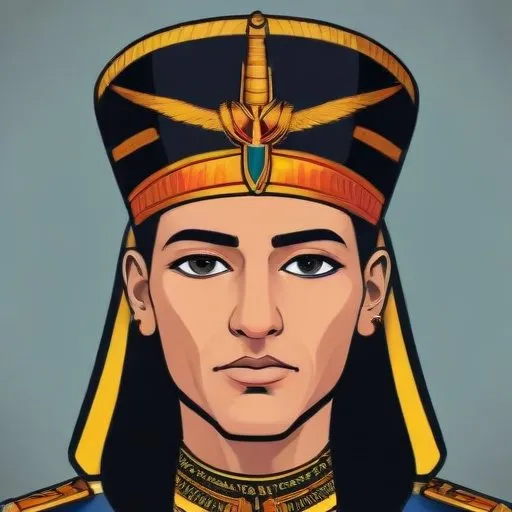
The monarch who oversaw Egypt's transition from a British protectorate to an independent kingdom, implementing modernizing reforms and promoting Arabic culture. He's also known for his efforts to establish a strong, centralized Egyptian state.
Fuad I, the ninth ruler of Egypt and Sudan from the Muhammad Ali dynasty, is best known for his pivotal role in navigating the country's transition from a British protectorate to a sovereign state. As the Sultan and later King of Egypt, he oversaw a period of immense change, marked by the country's declaration of independence in 1922.
Born on March 26, 1868, in Giza Palace, Cairo, Fuad was the fifth son of Ismail Pasha. Following his father's exile, he spent his childhood in Naples, Italy. He received his education at the military academy in Turin, Italy, where he developed a strong foundation in military tactics and strategic thinking.
Prior to ascending to the throne, Fuad played a crucial role in the establishment of Egyptian University, becoming its first rector in 1908. He held this position until his resignation in 1913, when he was succeeded by Hussein Rushdi Pasha. During this period, Fuad also made unsuccessful attempts to secure the throne of Albania, which had gained independence from the Ottoman Empire in 1912.
Fuad's ascension to the throne in 1917 came after the death of his brother Hussein Kamel. In the aftermath of the Egyptian Revolution of 1919, the United Kingdom ended its protectorate over Egypt, and on February 28, 1922, recognized it as a sovereign state. On March 15, 1922, Fuad issued a decree changing his title from Sultan of Egypt to King of Egypt, marking a significant milestone in the country's journey towards independence.
Fuad's reign was characterized by his commitment to education and cultural development. He served as president of the Egyptian Geographic Society from 1915 to 1918, and his patronage of the arts and sciences contributed significantly to the country's cultural renaissance.
Fuad I's reign marked a significant turning point in Egypt's history, as the country transitioned from a British protectorate to a sovereign state. His commitment to education, cultural development, and independence paved the way for Egypt's emergence as a major player in regional and global politics.
Fuad I's reign can be compared to that of his contemporaries, including Mustafa Kemal Atatürk of Turkey, who was also navigating the complexities of national independence and modernization. Both leaders shared a vision for a more secular and modern state, although their approaches differed in significant ways.
Fuad I was known for his close relationships with European leaders, including King Victor Emmanuel III of Italy and King George V of the United Kingdom. These relationships played a crucial role in securing Egypt's independence and navigating the complexities of international diplomacy.
Born in 1918
Led Egypt through a period of rapid modernization and nationalism, becoming a symbol of Arab unity and resistance to Western influence. He nationalized the Suez Canal and implemented socialist reforms.
98 Years Old
The authoritarian leader who ruled Egypt for nearly three decades, suppressing opposition and maintaining a tight grip on power, while also maintaining a delicate balance of power in the Middle East. He's infamous for his regime's human rights abuses and corruption.
74 Years Old
Egypt's first democratically elected president, who served from 2012 to 2013 and was a key figure in the Arab Spring uprising, known for his Islamist ideology and brief, tumultuous tenure.
71 Years Old
Egypt's sixth president, a military leader who seized power in a coup, known for his authoritarian rule and human rights abuses. He has dominated Egyptian politics since 2013.
