


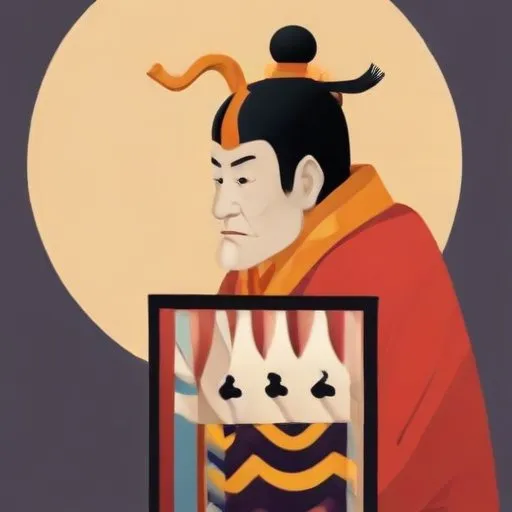
The 82nd emperor of Japan, who ruled from 1183 to 1198, is most known for his attempts to reform the imperial system and his patronage of the arts, particularly poetry.
Emperor GoToba, also known as the Later Emperor Toba, was the 82nd emperor of Japan, ruling from 1183 to 1198, and is remembered for his significant contributions to Japanese politics, culture, and society. He is particularly notable for his efforts in consolidating imperial power, promoting the arts, and reforming the Buddhist clergy.
Born on August 6, 1180, Emperor GoToba was the fourth son of Emperor Takakura and grandson of Emperor GoShirakawa. His mother, Bmon Shokushi, was a daughter of Bmon Nobutaka of the Fujiwara clan. Before his ascension to the throne, his personal name was Takahirashinn, which was later changed to Takanarishinn.
Emperor GoToba had multiple consorts and children, including:
During his reign, Emperor GoToba implemented several significant reforms, including:
Emperor GoToba's reign is often referred to as Japan's Golden Age, marked by cultural, economic, and political prosperity. His reforms and policies had a lasting impact on Japanese society, shaping the country's development for centuries to come.
Some notable events in Emperor GoToba's life include:
Emperor GoToba's reign coincided with the Kamakura period, a time of significant social, cultural, and political change in Japan. Compared to his contemporaries, Emperor GoToba's reforms and policies were marked by a stronger emphasis on imperial power and control.
In conclusion, Emperor GoToba's remarkable reign and legacy have had a lasting impact on Japanese history, shaping the country's development and cultural identity for generations to come.
Born in 1119
The 12th-century Japanese emperor who reigned from 1123 to 1142 and is famously known for his role in the Hogen Rebellion, a significant event in Japanese history that marked the beginning of the end of imperial power. He's also remembered for his strong personality and conflicts with the Fujiwara regents.
Born in 1139
A 14th-century Japanese emperor who reigned from 1394 to 1423, known for his efforts to reform the imperial court and restore its power. He's also famous for his poetry and calligraphy.
Born in 1103
A 12th-century Japanese emperor who ruled from 1107 to 1123 and is famous for his abdication and subsequent influence on the imperial court from behind the scenes. He's also known for his patronage of Buddhism and the arts.
Born in 1053
A Japanese emperor who ruled from 1073 to 1087 and is known for his abdication and establishment of the Insei system, where retired emperors held significant power behind the scenes.
Born in 1079
The 73rd emperor of Japan, ruling from 1086 to 1107, known for his cultural and artistic achievements, particularly in poetry and music. He also established the Imperial Poetry Office to promote Japanese literature.
Born in 1249
The 90th emperor of Japan, who reigned from 1259 to 1274, is most known for his efforts to reform the imperial court and restore its power during the Kamakura period. He's also famous for his love of poetry and literature.
