


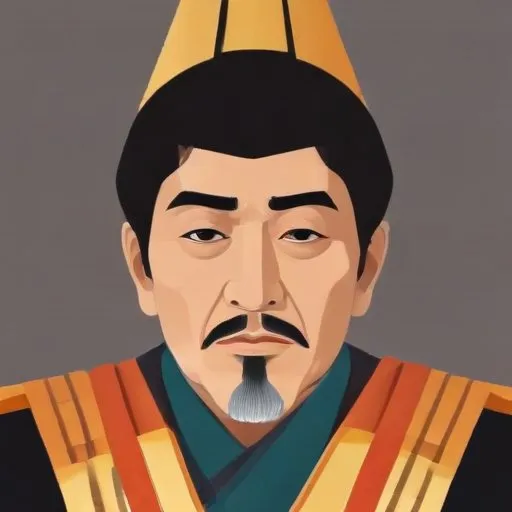
The 80th emperor of Japan, ruling from 1168 to 1180, known for his attempts to reform the imperial court and his patronage of Buddhist art and architecture.
Emperor Takakura, the 80th emperor of Japan, is often overlooked in the annals of history, but his reign marked a pivotal moment in the country's development. During his reign from 1168 to 1180, Japan experienced a cultural and economic golden age, and Takakura's wise leadership played a significant role in this flourishing.
Takakura was born on September 20, 1161, as Norihitoshinn, the fourth son of Emperor Go-Shirakawa. His mother, Empress Dowager Taira no Shigeko, was the younger sister of Taira no Tokiko, the concubine of Taira no Kiyomori, a powerful samurai leader.
Takakura's reign was marked by significant cultural and economic advancements. He encouraged the development of poetry, music, and art, and his court became a hub of intellectual and artistic activity. The emperor also promoted trade and commerce, which led to increased prosperity and growth.
Takakura's empress consort was Taira no Tokuko, later Empress Dowager Kenrei, who was also his first cousin. The couple had several children, including future emperors Antoku and Go-Toba. His other consorts and children included:
Takakura's reign marked a significant turning point in Japanese history. His cultural and economic reforms laid the groundwork for the country's future development, and his diplomatic efforts helped to establish Japan as a major power in East Asia.
Takakura was a patron of Buddhism and supported the construction of several temples and shrines. He believed in the importance of education and encouraged the study of Confucian classics.
Despite his many achievements, Takakura's reign was not without controversy. He faced opposition from powerful samurai leaders, including his own uncle, Taira no Kiyomori, who sought to increase their influence over the throne.
1161: Born on September 20 as Norihitoshinn 1168: Ascended to the throne as Emperor Takakura 1180: Abdicated the throne 1181: Died on January 30
Emperor Takakura's legacy may have been overshadowed by his more famous predecessors and successors, but his contributions to Japanese history cannot be overstated. His cultural and economic reforms, diplomatic efforts, and philosophical beliefs have had a lasting impact on Japan, and his reign remains a fascinating chapter in the country's rich history.
Born in 1220
The 127th emperor of Japan, who ruled from 1242 to 1246, is known for his brief reign and his role in the Imperial Court's struggles for power during the Kamakura period. He's also remembered for his poetry and patronage of the arts.
Born in 1243
The 89th emperor of Japan, ruling from 1246 to 1260, known for his efforts to reform the imperial court and restore its power during a time of decline. He's also famous for his poetry and patronage of the arts.
Born in 1249
The 90th emperor of Japan, who reigned from 1259 to 1274, is most known for his efforts to reform the imperial court and restore its power during the Kamakura period. He's also famous for his love of poetry and literature.
Born in 1147
Founded the Kamakura shogunate, a feudal military government that ruled Japan from 1185 to 1333, and is credited with establishing the samurai class as the ruling power in Japan.
Born in 1543
Unified Japan's warring states, establishing a dynasty that ruled for over 250 years, and is revered as a brilliant military strategist and statesman.
Born in 1579
The second shogun of the Tokugawa dynasty, who solidified the family's rule and established a rigid feudal system in Japan, known for his military campaigns and administrative reforms.
Born in 1305
The founder of the Ashikaga shogunate, a powerful military dictator who ruled Japan from 1338 to 1573, known for ending the Kamakura period and establishing a new feudal order.
