


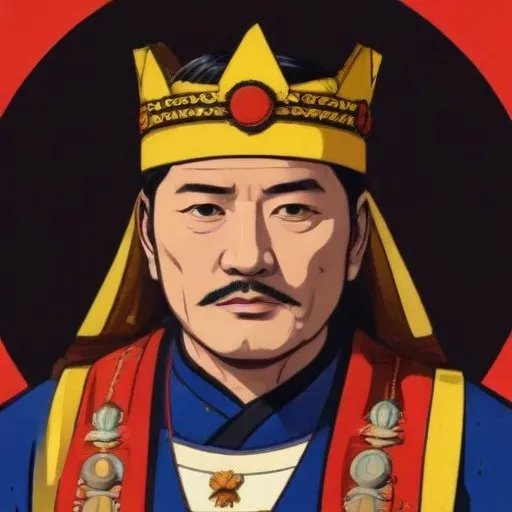
The last emperor of the Heian period, known for his tragic fate of drowning at the age of 7 during a sea battle, marking the end of the Taira dynasty. He's a symbol of the tumultuous era's conclusion.
Emperor Antoku is remembered as the tragic child emperor of Japan, whose life was cut short in a dramatic display of loyalty and sacrifice. As the 81st emperor of Japan, his reign spanned from 1180 to 1185, marked by a bitter struggle between warring clans that would shape the course of Japanese history.
Antoku's life was marred by conflict from the very beginning. Born on December 22, 1178, he was named crown prince at just one month old and ascended to the throne at the tender age of two. However, real power rested with his grandfather, Taira no Kiyomori, who ruled in Antoku's name.
The climactic Battle of Dannoura in April 1185 marked a turning point in Japanese history. Minamoto no Yoritomo, leader of the Minamoto clan, clashed with the Taira clan, who controlled the emperor. In the heat of battle, Antoku's grandmother, Taira no Tokiko, took the child emperor and plunged into the water, drowning him rather than allowing him to fall into enemy hands.
Antoku's tragic fate has been immortalized in Japanese literature, inspiring the epic poem The Tale of the Heike, which tells the story of the clash between the Taira and Minamoto clans. The legend of Emperor Antoku has also led to multiple claims about the location of his tomb, with various sites around western Japan, including the island of Iwo Jima, vying for the distinction.
Emperor Antoku's life and death serve as a poignant reminder of the intense struggles that shaped Japan's medieval period. His story has been etched into Japanese folklore, inspiring generations of writers, artists, and historians. Today, his legacy continues to captivate audiences, a testament to the enduring power of tragedy and sacrifice.
Born in 1127
The 77th emperor of Japan, who ruled from 1155 to 1158 and later became a powerful cloistered emperor, influencing Japanese politics and culture for over 30 years. He's known for his efforts to consolidate imperial power and promote Buddhism.
Born in 1147
Founded the Kamakura shogunate, a feudal military government that ruled Japan from 1185 to 1333, and is credited with establishing the samurai class as the ruling power in Japan.
