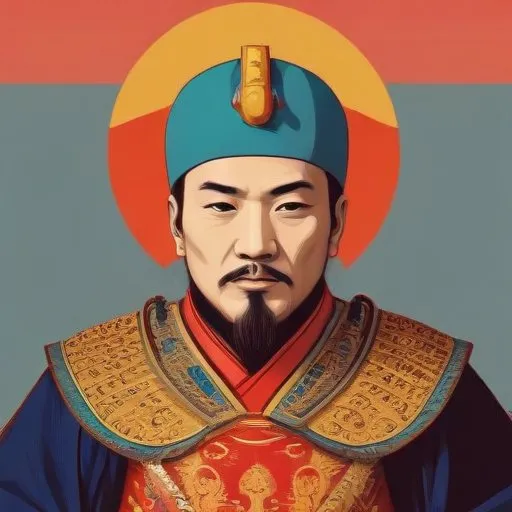
Emperor Taizong of Jin: The Unyielding Conqueror of Northern China
The Rise of a Dynamo
Emperor Taizong of Jin, also known as Wanyan Sheng, is renowned for his relentless conquests, expanding the Jin dynasty's territory to unprecedented heights. His tactical genius and unwavering resolve led to the downfall of the Liao and Northern Song dynasties, cementing his position as one of the most formidable emperors in Chinese history.
Early Life and Ascension
Born on November 25, 1075, as Wuqimai, the fourth son of Helibo and Lady Nalan, Taizong was destined for greatness. He succeeded his brother, Aguda Emperor Taizu, in 1123, inheriting the Jin dynasty's throne. This marked the beginning of his illustrious reign, which would span over a decade.
Military Campaigns and Conquests
Taizong's military prowess is legendary. He commissioned his trusted general, Wanyan Loushi, to attack the Liao dynasty, leading to the capture of Emperor Tianzuo in 1125. This triumph marked the end of the Liao dynasty's reign. Taizong's sights then turned to the Song dynasty, and in 1127, he captured the Northern Song capital, Bianjing (modern-day Kaifeng, Henan Province). The infamous Jingkang Incident, which resulted in the capture of Emperors Huizong and Qinzong, marked the demise of the Northern Song dynasty and the beginning of the Southern Song dynasty.
Reign and Legacy
Taizong's era, known as the Tianhui era, was characterized by his unwavering ambition and strategic genius. He established a strong centralized government, reformed the administrative system, and promoted Confucianism. After his death on February 9, 1135, he was posthumously honored with the temple name Taizong by his successor, Emperor Xizong.
Personal Milestones and Key Life Events
- November 25, 1075: Born as Wuqimai, the fourth son of Helibo and Lady Nalan
- 1123: Succeeded his brother, Aguda Emperor Taizu, as the second emperor of the Jin dynasty
- 1125: Ordered the capture of Emperor Tianzuo, marking the end of the Liao dynasty
- 1127: Captured the Northern Song capital, Bianjing, and Emperors Huizong and Qinzong
- February 9, 1135: Passed away, leaving behind a legacy of conquest and reform
Historical Context and Legacy
Taizong's reign was marked by the Jin dynasty's ascendance to prominence, and his military campaigns shaped the course of Chinese history. His conquests led to the formation of the Southern Song dynasty, which would go on to play a significant role in Chinese politics and culture. Taizong's legacy as a conqueror and reformer continues to inspire awe and admiration.
Awards and Honors
Posthumously honored with the temple name Taizong by Emperor Xizong
Trivia and Fun Facts
- -Taizong's era name, Tianhui, translates to "Heavenly Wisdom"
- -He was the first Jin dynasty emperor to adopt a Chinese-style temple name
Influence on Modern Society
Taizong's military campaigns and reforms continue to influence modern Chinese politics, culture, and identity. His legacy serves as a testament to the power of strategic vision and unwavering determination.
FAQ
When did Emperor Taizong of Jin rule?
Emperor Taizong of Jin ruled from 936 to 942 CE, during the Five Dynasties and Ten Kingdoms period in Chinese history.
What was Emperor Taizong of Jins relationship with the Tang Dynasty?
Emperor Taizong of Jin was a former Tang Dynasty general who rebelled against the Tang government and established the Jin Dynasty.
What were Emperor Taizong of Jins notable achievements?
Emperor Taizong of Jin is known for his military campaigns, which expanded the Jin Dynastys territory and established it as a major power in northern China.
How did Emperor Taizong of Jin come to power?
Emperor Taizong of Jin seized power after the death of his predecessor, Shi Jingtang, and declared himself emperor.
What was Emperor Taizong of Jins reign like?
Emperor Taizong of Jins reign was marked by military conquests, administrative reforms, and cultural developments, including the establishment of a new capital city.