


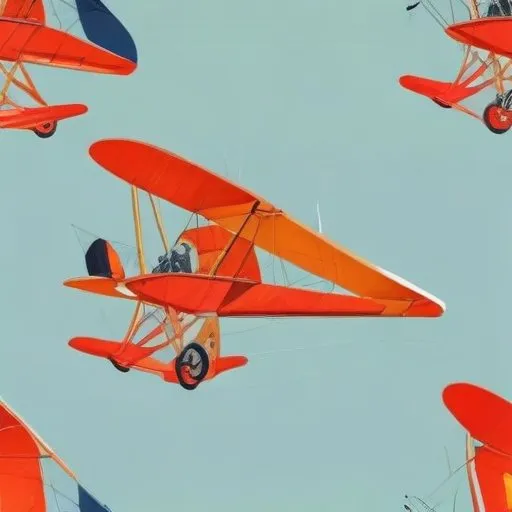
A German engineer and designer who invented the human-powered aircraft, a pioneering achievement in aviation history. He's most known for his innovative and daring designs that pushed the boundaries of flight.
Meet Engelbert Zaschka, a trailblazing German inventor, engineer, and designer who made significant contributions to aviation and automotive industries. He is renowned for pioneering rotary aircraft, foldable cars, and even muscle-powered airplanes, revolutionizing the way we think about transportation.
Zaschka's work primarily focused on aviation, and he is credited with developing the first collapsible and foldable small car, which he designed and constructed between 1928 and 1929. Additionally, in 1934, he created an early muscle-powered airplane, showcasing his innovative approach to flight.
Born on September 1, 1895, in Freiburg im Breisgau, Germany, Zaschka came from a family of musicians. His father, Wenzel, was a zither teacher and played in the Freiburg City Orchestra, while his mother, Emilie, was a singer. From a young age, Zaschka showed a keen interest in engineering and innovation, applying for his first patent at just 14 years old.
Zaschka's impressive career spanned several decades, during which he worked as an engineer at Rheinmetall in Düsseldorf and as chief designer at Orion Aktiengesellschaft für Motorfahrzeuge in Berlin. In the 1930s and 1940s, he was employed by the aircraft manufacturer Henschel. After World War II, he returned to Freiburg and operated a workshop vehicle factory.
Zaschka's groundbreaking work in rotary aircraft and muscle-powered flight has left a lasting impact on the aviation industry. His innovative designs and pioneering spirit have inspired generations of engineers and inventors, paving the way for modern transportation systems.
Zaschka's remarkable legacy continues to inspire and fascinate people around the world. His contributions to the fields of aviation and automotive engineering have left an indelible mark on history, cementing his place as one of the most innovative minds of the 20th century.
Born in 1848
Pioneering glider flights and innovative wing designs paved the way for modern aviation. His experiments and findings greatly influenced the development of powered flight.
Born in 1841
A French engineer who designed and built the Ader Avion III, a pioneering aircraft that attempted the first powered, controlled, and sustained flight. He's known for his innovative aviation designs and experiments.
Born in 1897
Pioneering female aviator who broke records and pushed boundaries in flight, mysteriously disappearing during a attempted circumnavigation of the globe.
Born in 1889
Designed and built the first successful single-main-rotor helicopter, revolutionizing air travel and search-and-rescue operations. Founded a leading aircraft manufacturing company that still bears his name.
Born in 1882
Pioneering aviator and inventor who designed and built the first successful seaplane, achieving a historic flight in 1910. His innovative designs paved the way for modern hydroaviation.
