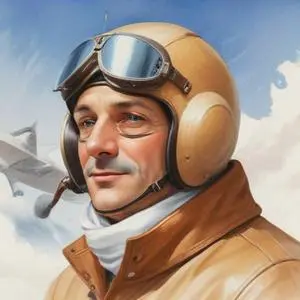
Honoring the Pioneer of Seaplanes: Henri Fabre
Achieving the Impossible: Taking Flight from Water
Henri Fabre is renowned for inventing the first successful seaplane, the Fabre Hydravion, which revolutionized aviation by enabling takeoffs and landings on water. This innovative feat was accomplished on March 28, 1910, at the Etang de Berre, where Fabre successfully completed four consecutive flights, with the longest one covering an impressive 600 meters.
Early Life and Education
Born on November 29, 1882, in Marseille, France, Henri Fabre came from a prominent family of shipowners. He received his education at the Jesuit College of Marseilles, where he developed a strong foundation in sciences. This solid educational background would later prove instrumental in his groundbreaking work in aeroplane and propeller designs.
Pioneering Work in Aviation
Fabre's passion for aviation led him to patent a system of flotation devices, which enabled him to create the first successful seaplane. His invention caught the attention of prominent aviators like
Glenn Curtiss and
Gabriel Voisin, who built upon his design to develop their own seaplanes. This marked the beginning of a new era in aviation, where the possibility of taking off and landing on water became a reality.
A Long and Fulfilling Life
Henri Fabre's life was a testament to his passion and dedication to his work. Even at the ripe age of 89, he was still sailing his own boat single-handedly in Marseille harbor. He passed away on June 30, 1984, at the age of 101, leaving behind a legacy as one of the last living pioneers of human flight.
Lasting Impact on Aviation
The Fabre Hydravion, now on display at the Musée de l'Air in Paris, stands as a testament to Fabre's innovative spirit. His contributions to aviation have inspired generations of inventors, engineers, and pilots. As a result, seaplanes have become an integral part of modern aviation, enabling transportation and exploration in areas inaccessible by traditional land-based aircraft.
Personal Milestones and Key Life Events
- March 28, 1910: Successfully completed four consecutive flights with his seaplane, the Fabre Hydravion.
- 1971: Still sailing his own boat single-handedly in Marseille harbor at the age of 89.
- June 30, 1984: Passed away at the age of 101, leaving behind a legacy as one of the last living pioneers of human flight.
Legacy and Rememberance
Henri Fabre's remarkable achievements have cemented his place in the annals of aviation history. His pioneering work has paved the way for future generations of inventors, engineers, and pilots, inspiring them to push the boundaries of human flight. As we look back at his extraordinary life, we are reminded of the power of innovation, dedication, and passion.
FAQ
Who was Henri Fabre, the French pilot and engineer?
Henri Fabre was a French pilot and engineer who made significant contributions to aviation history. He is credited with designing and building the first successful seaplane, the Hydravion, in 1910. Fabres innovative designs paved the way for modern seaplanes and amphibious aircraft.
What was Henri Fabres most notable invention?
Henri Fabres most notable invention was the Hydravion, a seaplane that could take off and land on water. This invention marked a significant milestone in aviation history, demonstrating the feasibility of hydroaviation.
How did Henri Fabres work impact the development of aviation?
Henri Fabres work on seaplanes and amphibious aircraft had a significant impact on the development of aviation. His designs influenced the development of modern seaplanes and amphibious aircraft, which are still used today for transportation, search and rescue, and military operations.
What is Henri Fabres legacy in the field of aviation?
Henri Fabres legacy in the field of aviation is that of a pioneer and innovator. He is remembered for his groundbreaking work on seaplanes and amphibious aircraft, which opened up new possibilities for air travel and exploration.
What is Henri Fabres place in French aviation history?
Henri Fabre is considered one of the most important figures in French aviation history. His innovative designs and pioneering work on seaplanes and amphibious aircraft earned him a reputation as a visionary and trailblazer in the field of aviation.