


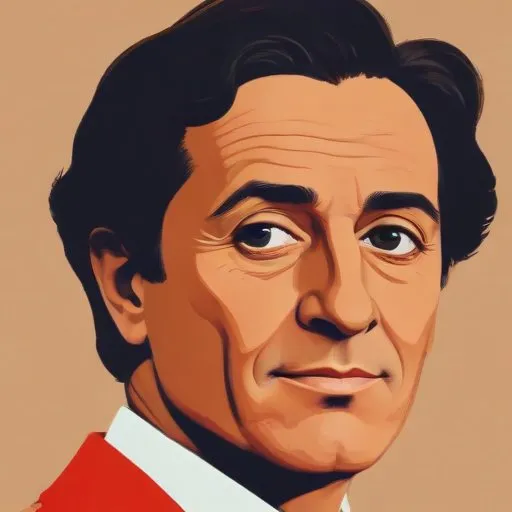
Acclaimed Italian author, screenwriter, and critic behind iconic films like "La Dolce Vita" and "8 1/2", known for his witty, poignant portrayals of post-war Italian society.
Ennio Flaiano is best known for his remarkable collaborations with the iconic Italian director Federico Fellini, co-writing ten screenplays that would go on to become cinematic masterpieces, including La Strada (1954), La Dolce Vita (1960), and 8 1/2 (1963). As a celebrated screenwriter, playwright, novelist, journalist, and drama critic, Flaiano's work left an indelible mark on Italian cinema and literature.
Born on March 5, 1910, in Pescara, Italy, Flaiano began his writing career as a journalist, contributing to prominent Italian newspapers and magazines such as Cineillustrato, Oggi, Il Mondo, and Il Corriere della Sera. His early work as a journalist honed his writing skills, preparing him for his future endeavors in screenwriting and literature.
In 1947, Flaiano won the prestigious Strega Prize for his novel Tempo di uccidere (Miriam or A Time to Kill in English). Set in Italian Eritrea during the Italian invasion of Ethiopia, the novel tells the haunting story of an Italian officer's brutal act and subsequent torment. This powerful work is part of a growing literary movement that confronts Italy's colonial past in Eastern Africa.
Flaiano's collaboration with Fellini spanned over two decades, resulting in some of the most iconic films in cinematic history. Their partnership was built on a deep understanding of each other's creative vision, allowing them to craft screenplays that were both visually stunning and intellectually stimulating. Flaiano's contribution to Fellini's films cannot be overstated, as he brought a level of literary sophistication to the director's cinematic vision.
In 1971, Flaiano suffered a heart attack, prompting him to put his papers in order and publish his memoirs. Although some of his memoirs were published posthumously, they offer a glimpse into the mind of a creative genius. Tragically, Flaiano passed away on November 20, 1972, at the age of 62, while undergoing a routine checkup at a clinic.
Ennio Flaiano's legacy extends far beyond his impressive body of work. He played a crucial role in shaping Italian cinema and literature, leaving behind a rich cultural heritage. His contributions to Fellini's films have inspired generations of filmmakers, writers, and artists. Today, Flaiano's work remains a testament to the power of creativity and collaboration, continuing to captivate audiences around the world.
Ennio Flaiano's remarkable career serves as a reminder of the transformative power of art and literature. His work continues to inspire and captivate audiences, solidifying his place as one of the most important creative visionaries of the 20th century.
Born in 1920
Visionary filmmaker behind surreal, poetic, and deeply personal cinematic masterpieces that blur the lines between reality and fantasy.
83 Years Old
A renowned Italian actor, director, producer, and screenwriter, known for his iconic roles in films like "L'innocente" and "Hannibal", bringing depth and charisma to his characters.
Born in 1924
A renowned actor and singer, starring in over 150 films, including iconic Italian neorealist classics and international productions, earning him numerous awards and nominations.
94 Years Old
A stunning Swedish-Italian model and actress who gained international fame for her iconic roles in Federico Fellini's films, particularly in "La Dolce Vita". She's a symbol of 1960s glamour and sensuality.
Born in 1901
A renowned filmmaker and actor, known for directing poignant, neorealist classics like "Bicycle Thieves" and "Umberto D.", which still influence world cinema today.
Born in 1912
A pioneering filmmaker who explored the human condition through visually stunning and psychologically complex movies, often focusing on alienation and social isolation.
Born in 1906
Acclaimed Italian filmmaker renowned for lavish, visually stunning productions that often explored themes of social class, morality, and the human condition. His cinematic masterpieces continue to influence filmmakers today.
