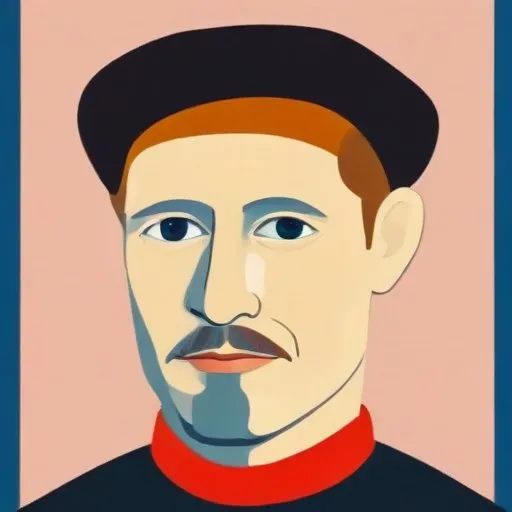
Erik Schmidt: The Estonian Painter and Writer Who Defied Convention
A Rebel Artist and Seafarer
Erik Schmidt was a Estonian painter and writer, known for his vibrant and evocative works of art, as well as his unconventional life path. Born on August 15, 1925, on the island of Naissaar, Estonia, Schmidt's early life was marked by a love for the sea and a desire to follow in his father's footsteps as a master mariner.
A Family Legacy of Innovation
Schmidt's family was no stranger to innovation and creativity. His uncle,
Bernhard Schmidt, was a renowned optician who invented the Schmidt camera, a groundbreaking piece of technology that revolutionized the field of optics.
Early Beginnings and Unexpected Turns
Schmidt's early life was marked by a love for the sea and a desire to become a sea captain. However, his talents lay elsewhere. He was a talented amateur painter, and his early works caught the attention of Ants Laikmaa, a prominent Estonian artist. This recognition led to Schmidt becoming a teacher at the tender age of 17, a decision that would ultimately save him from being drafted into the Estonian Legion or German Arbeitsdienst during World War II.
Fleeing War and Finding Inspiration
As the war drew to a close, Schmidt and his parents fled to Sweden, where they were warmly received by the Brodin family, a prominent shipowning clan. It was during this period that Schmidt's love for art was reignited, and he began to explore his creative side in earnest. He met Ariel Agemian, a talented Armenian painter, who would become a mentor and guide, encouraging Schmidt to pursue a career in art.
A New Path: From Seafarer to Artist
Schmidt's voyages to South American ports provided ample opportunity for him to hone his skills as an artist. He showed his work to Agemian, who offered guidance and encouragement. Eventually, Schmidt made the bold decision to leave his life as a seafarer behind and dedicate himself fully to art. This marked the beginning of a new chapter in his life, one that would see him Study at the École nationale supérieure des Beaux-Arts in Paris.
Philosophical Contributions and Beliefs
Schmidt's artistic style was deeply influenced by his experiences as a seafarer and his love for the natural world. His works often featured vibrant colors and bold brushstrokes, reflecting his desire to capture the dynamic energy of the sea. His artistic philosophy was centered around the idea that art should be a reflection of life, rather than a mere imitation of reality.
Career Highlights and Major Works
Schmidt's artistic career was marked by a series of notable works, including his vibrant landscapes and seascapes. His paintings were highly sought after, and he became a prominent figure in the Estonian art world.
Legacy and Impact
Erik Schmidt's legacy extends far beyond his own artistic contributions. He inspired a new generation of Estonian artists, and his unconventional life path serves as a testament to the power of following one's passion. His bold decision to leave behind a life at sea and pursue a career in art is a powerful reminder that it's never too late to chart a new course.
Quotes and Memorable Sayings
"I never wanted to be just a sailor, I wanted to be an artist of the sea."
In Memoriam
Erik Schmidt passed away on April 18, 2014, leaving behind a legacy of vibrant art and a life that defied convention. His story serves as a powerful reminder that it's never too late to pursue our passions, and that art can be a powerful tool for self-expression and rebellion.
FAQ
What was Erik Schmidts primary artistic medium?
Erik Schmidt was a Swedish-Estonian painter and author, known for his vibrant and expressive oil paintings, as well as his literary works.
What inspired Erik Schmidts artistic style?
Erik Schmidts artistic style was influenced by his Estonian heritage and the folk art of the Baltic region, as well as by modernist movements such as Expressionism.
Did Erik Schmidt receive formal art training?
Erik Schmidt studied art at the Stockholm Academy of Art and later at the Royal Academy of Fine Arts in Copenhagen, Denmark.
What literary works did Erik Schmidt write?
Erik Schmidt wrote several novels and poetry collections, often exploring themes of identity, culture, and the human condition.
How did Erik Schmidts cultural heritage impact his art?
Erik Schmidts Swedish-Estonian background deeply influenced his art, as he often incorporated traditional folk motifs and symbolism into his paintings and literary works.