


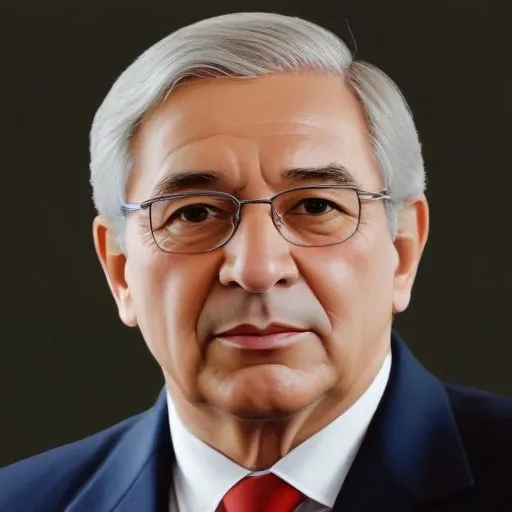
The 29th President of Colombia, a key figure in the country's politics, known for his involvement in the country's peace process and accused of receiving campaign funds from the Cali cartel. He served from 1994 to 1998.
Ernesto Samper, a prominent Colombian politician, served as the President of Colombia from 1994 to 1998, representing the Liberal Party, and later became the Secretary General of the Union of South American Nations (UNASUR) from 2014 to 2017. He is also known for being embroiled in the infamous "8000 process" scandal, which threatened to topple his presidency.
Ernesto Samper was born on August 3, 1950, in Bogotá, Colombia, to Andrs Samper Gnecco and Helena Pizano Pardo. He hails from a prestigious family with a rich history in Colombian politics and literature. His great-great-grandfather, Teodoro Valenzuela Sarmiento, was the nephew of Crisanto Valenzuela Conde, a hero of Colombia's independence movement. Samper's family tree also boasts a poet, Diego Fallón, and a renowned architect, Germán Samper Gnecco.
Samper's political career took off in the 1980s, when he held various government positions, including Minister of Economic Development and Minister of the Interior. In 1994, he won the presidential election, albeit with controversy, as allegations of campaign financing by the Cali Cartel surfaced. Despite this, Samper was acquitted by the Colombian Chamber of Representatives in 1996.
During his presidency, Samper focused on economic development, strengthening democratic institutions, and addressing Colombia's internal conflict. He implemented various reforms, including a new constitution, and introduced measures to combat corruption and drug trafficking.
The "8000 process" scandal, in which Samper was accused of accepting campaign funds from the Cali Cartel, tarnished his presidency and threatened his political career. Although acquitted, the scandal left a lasting impact on his legacy. Despite this, Samper remains a significant figure in Colombian politics, with his experience and diplomatic acumen contributing to his later role as Secretary General of UNASUR.
Samper is the brother of writer and journalist Daniel Samper Pizano, and uncle of Daniel Samper Ospina, former director of SoHo Magazine. His family connections and relationships have played a significant role in shaping his political and literary sphere.
"Colombia is a country with a great future, but a difficult present. We must work together to overcome our challenges and build a better tomorrow."
Ernesto Samper's complex and multifaceted career serves as a testament to the intricate nature of Colombian politics. Despite facing controversy, he remains an influential figure in the region, dedicated to promoting unity and cooperation across South America.
Ernesto Samper's legacy is marked by controversy, yet his commitment to Colombian politics and regional cooperation cannot be denied. As a statesman, he has contributed to shaping the country's economic and democratic landscape. His story serves as a reminder of the complexities of politics and the importance of perseverance in the face of adversity.
79 Years Old
The 36th President of Colombia, a key figure in the country's politics and economy, known for his efforts to reform the Colombian economy and tackle the drug trade. He also played a crucial role in the extradition of Pablo Escobar.
74 Years Old
The 39th President of Colombia, a lawyer and politician, is known for his hardline stance against guerrilla groups and his efforts to strengthen the country's economy. He's also infamous for his alleged ties to paramilitary groups.
75 Years Old
The 59th President of Colombia, a Nobel Peace Prize winner, who led the country's peace process, ending a 52-year conflict with the FARC guerrilla group. He's known for his efforts to bring peace and stability to Colombia.
Born in 1913
A Colombian lawyer and politician who served as the 24th President of Colombia, known for his efforts to reform the country's economy and promote peace during a time of civil unrest. He's remembered for his commitment to social justice and human rights.
