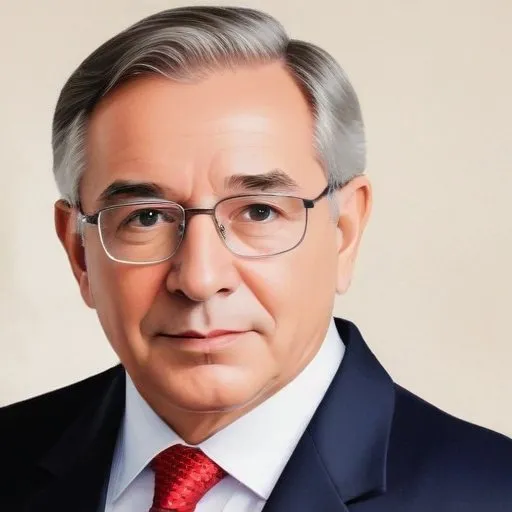
Álvaro Uribe: The Controversial President of Colombia
A Legacy of Military Force and Human Rights Concerns
Álvaro Uribe, the 31st President of Colombia, is known for his hardline approach to combating leftist guerrilla groups, particularly the Revolutionary Armed Forces of Colombia (FARC) and the National Liberation Army (ELN), during his presidency from 2002 to 2010. His controversial term was marked by a significant increase in military spending, which led to both praise for its effectiveness in reducing violence and criticism for its human rights implications.
Early Life and Political Career
Born on July 4, 1952, in Salgar, Antioquia, Colombia, Uribe pursued a degree in law from the University of Antioquia. He began his political career in his home department of Antioquia, holding offices in the Public Enterprises of Medellín and the Ministry of Labor. He later served as the director of the Special Administrative Unit of Civil Aeronautics from 1980 to 1982.
Rise to Power
Uribe's political career gained momentum when he was elected Mayor of Medellín in 1982. He then served as a senator from 1986 to 1994 and later as the Governor of Antioquia from 1995 to 1997. His leadership and strong stance against guerrilla groups propelled him to the presidency in 2002.
Plan Colombia and the War on Terror
Uribe's presidency was marked by the implementation of Plan Colombia, a $2.8 billion USD foreign aid package provided by the Clinton and Bush administrations. This massive investment in Colombia's military infrastructure enabled Uribe to launch an all-out offensive against FARC and ELN. While this campaign led to a significant decline in violence, it also sparked controversy surrounding human rights violations, particularly in the context of the "false positives" scandal, in which thousands of civilians were killed by the Colombian army.
Paramilitary Demobilization and Peace Talks
During his presidency, Uribe also led efforts to demobilize the right-wing paramilitary group, the United Self-Defense Forces of Colombia (AUC). However, this process was marred by allegations of corruption and human rights abuses. Uribe was also critical of his successor,
Juan Manuel Santos, and his peace talks with FARC guerrillas.
Post-Presidency and Controversies
After leaving office in 2010, Uribe was appointed as the vice-chairman of the UN panel investigating the Gaza flotilla raid. In 2012, he founded the right-wing Democratic Center movement, which contested the 2014 national elections. Uribe was elected as a senator in the 2014 parliamentary election and took office in July 2014. However, his post-presidency has been marked by controversy, including allegations of bribery and witness tampering, which led to his arrest and subsequent house arrest in 2020.
Legacy and Impact
Uribe's presidency was marked by a significant reduction in violence and an increase in investment in Colombia's economy. However, his human rights record remains a subject of debate, with many criticizing his administration's role in the "false positives" scandal. Despite this, Uribe remains a polarizing figure in Colombian politics, with many Colombians viewing him as a strong leader who brought stability to the country, while others see him as a symbol of state-sponsored violence and human rights abuses.
- Uribe's net worth is estimated to be around $200 million, largely due to his business dealings and investments.
- He is known for his conservative and nationalist views, often emphasizing the importance of family, religion, and traditional values.
- Uribe has been the subject of several awards and honors, including the Presidential Medal of Freedom, which was awarded to him in 2009.
Despite the controversy surrounding his presidency, Álvaro Uribe remains an influential figure in Colombian politics, with many Colombians continuing to view him as a strong leader who brought stability to the country.
FAQ
What is Álvaro Uribes political career highlights?
Álvaro Uribe served as the President of Colombia from 2002 to 2010, leading the country through a period of significant economic growth and security improvements.
What were Álvaro Uribes key policies as President?
Álvaro Uribe implemented several key policies, including the Democratic Security strategy, which aimed to reduce crime and violence, and the Uribe Doctrine, which focused on strengthening the military and improving social services.
What awards and accolades has Álvaro Uribe received?
Álvaro Uribe has received several awards for his contributions to Colombian politics, including the Presidential Medal of Freedom in 2009. He was also named World Leader of the Year by the Guardian in 2008.
How has Álvaro Uribe been involved in Colombian politics since leaving office?
Álvaro Uribe has remained active in Colombian politics, serving as a Senator from 2014 to 2018 and founding the Democratic Center party. He has been a vocal critic of the Colombian peace process and has advocated for a tougher stance on crime.
What are Álvaro Uribes views on the Colombian peace process?
Álvaro Uribe has been a vocal critic of the Colombian peace process, arguing that it has been too lenient on former FARC guerrilla leaders and has not done enough to address the root causes of the conflict.