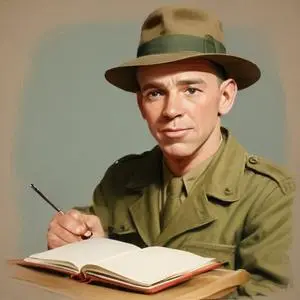
Ernie Pyle: The Pulitzer Prize-Winning War Correspondent
The Voice of the Ordinary Soldier
Ernie Pyle, a renowned American journalist and war correspondent, is best known for his heart-wrenching stories of ordinary soldiers during World War II. His unique, folksy style of reporting humanized the war, bringing the experiences of the common soldier to the forefront of American consciousness.
Early Life and Education
Born on August 3, 1900, on a farm near Dana, Indiana, Pyle grew up in a rural community with little access to formal education. Despite this, he was driven to pursue a more adventurous life, enlisting in the U.S. Naval Reserve during World War I. He began his training at the University of Illinois, but the war ended before he could be transferred to the Greco-Turkish War.
Rise to Prominence
Pyle's journalism career spanned over two decades, during which he worked as a roving human-interest reporter for the Scripps-Howard newspaper syndicate from 1935 to 1941. His stories about ordinary Americans earned him widespread acclaim, and he became known for his ability to capture the essence of everyday life.
War Correspondent
When the United States entered World War II, Pyle's focus shifted to the front lines. He reported from the European theater from 1942 to 1944 and the Pacific theater in 1945, bringing the harsh realities of war to the American public. His writing style, characterized by simplicity, empathy, and a deep understanding of the human condition, resonated with readers nationwide.
Pulitzer Prize and Legacy
In 1944, Pyle was awarded the Pulitzer Prize for his reporting on the experiences of "dogface" infantry soldiers. His work during World War II cemented his status as one of the most respected and beloved war correspondents of his time. At the time of his death in 1945, Pyle's syndicated column was published in over 400 daily and 300 weekly newspapers, making him a household name.
Personal Milestones and Key Life Events
- April 18, 1945: Ernie Pyle is killed by enemy fire on Ie Shima during the Battle of Okinawa.
- 1944: Pyle wins the Pulitzer Prize for his reporting on the experiences of "dogface" infantry soldiers.
- 1942: Pyle begins reporting from the European theater, capturing the essence of World War II.
- 1935-1941: Pyle works as a roving human-interest reporter for the Scripps-Howard newspaper syndicate.
Influence on Modern Society
Pyle's work had a profound impact on American society, humanizing the war effort and giving voice to the ordinary soldier. His writing style, characterized by empathy and simplicity, continues to inspire journalists and writers to this day.
Quotes and Memorable Sayings
- "No war has ever been fought in which the individual soldier was not the most important part."
- "The closest thing to being a civilian is to be an infantryman in the war."
Historical Context and Legacy
Ernie Pyle's legacy extends far beyond his Pulitzer Prize-winning reporting. He played a crucial role in shaping America's understanding of World War II, and his work continues to serve as a powerful reminder of the sacrifices made by ordinary soldiers during times of war.
FAQ
What was Ernie Pyles experience as a war correspondent?
Ernie Pyle was a renowned war correspondent who covered World War II, reporting from the front lines and embedding with troops. He witnessed the brutality of war, which deeply affected him and influenced his writing.
What awards did Ernie Pyle win for his journalism?
Ernie Pyle won the Pulitzer Prize in 1944 for his distinguished reporting of the war overseas. He was also awarded the Purple Heart for his injuries during the war.
What was Ernie Pyles most famous column?
Ernie Pyles most famous column was The Death of Captain Waskow, which told the story of a fallen soldier and humanized the sacrifices of war.
How did Ernie Pyle die?
Ernie Pyle died on April 18, 1945, during the Battle of Okinawa, when he was struck by Japanese machine-gun fire while reporting on the war.
What legacy did Ernie Pyle leave on journalism?
Ernie Pyles reporting style, which focused on the human side of war, has influenced generations of journalists. He is remembered as one of the greatest war correspondents of all time, and his writing continues to inspire and educate readers today.