


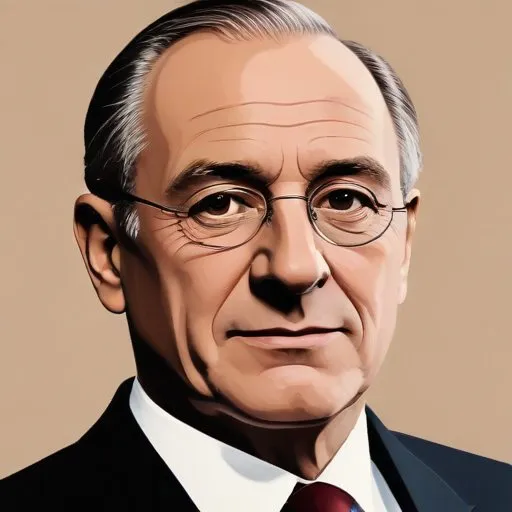
A Swiss lawyer and politician who served as the President of the Swiss Confederation, known for his leadership and contributions to the country's governance. He played a significant role in shaping Switzerland's political landscape during his tenure.
Ernst Wetter, a Swiss politician, is best known for his tenure as a member of the Swiss Federal Council from 1938 to 1943, during which he helmed the Department of Finance and served as President of the Confederation in 1941. His financial acumen and leadership played a crucial role in navigating Switzerland through the tumultuous years of World War II.
Born on August 27, 1877, Wetter's life was marked by a strong commitment to public service. Before his election to the Federal Council, he was an active member of the Free Democratic Party and held various positions in the cantonal and federal governments.
Wetter's rise to prominence began in 1938, when he was elected to the Federal Council, the highest executive authority in the Swiss government. His vast experience in finance and economics made him an ideal candidate to lead the Department of Finance.
Wetter's tenure as Finance Minister coincided with the outbreak of World War II, which posed significant economic challenges to Switzerland. He implemented a series of measures to stabilize the country's economy, including the introduction of a war economy, rationing of essential goods, and the establishment of an exchange control system.
As President of the Confederation in 1941, Wetter played a key role in maintaining Switzerland's neutrality during the war. His leadership and diplomatic skills helped the country navigate the complex web of alliances and international relations, ensuring Switzerland's sovereignty and economic stability.
Wetter's legacy is marked by his steadfast commitment to Switzerland's financial stability and sovereignty. His leadership during World War II ensured the country's economic resilience and independence, earning him a reputation as a skilled statesman and finance expert.
Today, Wetter is remembered as a pioneer in Swiss politics, whose contributions to the country's economic development continue to inspire future generations of leaders.
Wetter's political philosophy was rooted in the principles of liberalism and federalism. He believed in the importance of individual freedom, economic stability, and decentralized governance, which guided his decision-making during his tenure as Finance Minister.
Wetter's legacy serves as a testament to the importance of prudent economic management, wise leadership, and commitment to sovereignty. His contributions to Switzerland's development continue to influence the country's political and economic landscape.
Born in 1899
A Swiss jurist and politician who served as the President of the Swiss Confederation, known for his leadership and contributions to Swiss politics and law.
Born in 1891
A Swiss lawyer and politician who served as the 52nd President of the Swiss Confederation, known for his leadership and contributions to Swiss politics.
Born in 1913
A Swiss lawyer and politician who served as the President of the Swiss Confederation, known for his progressive policies and efforts to modernize the country's education system.
Born in 1908
A Swiss lawyer and politician who served as the President of the Swiss Confederation, known for his diplomatic efforts and contributions to Swiss politics.
