


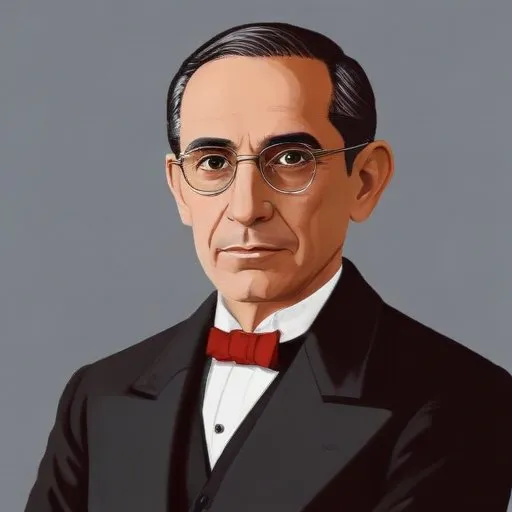
A pioneer in aerodynamics, he applied mathematical principles to improve aircraft design and performance. His work laid the foundation for modern aerodynamics and aircraft engineering.
Esteban Terradas i Illa, a Spanish mathematician, scientist, and engineer, left an indelible mark on the fields of mathematics, physics, and engineering. With a vast range of expertise, he made significant contributions to various industries, including aeronautics, electric power, telephone, and railway, earning him recognition as one of the most influential minds of his time.
Terradas' academic journey began at the tender age of 15, when he entered the University in 1898. He went on to hold two doctorates in mathematics and physics, as well as two degrees in engineering, from the ETSEIB school. This extraordinary academic achievement paved the way for his illustrious career as a professor of mathematical analysis, teaching differential equations and later, mathematical physics at Barcelona Central University.
His academic repertoire expanded to include teaching positions at the University of Barcelona, University of Zaragoza, University of Buenos Aires, and the University of La Plata in Argentina and Montevideo in Uruguay. He also taught mechanics, acoustics, optics, electricity, and magnetism, showcasing his remarkable grasp of diverse subjects.
Terradas' exceptional contributions to science and mathematics earned him numerous awards and honors. He was granted honorary doctorates by the Universities of Buenos Aires, University of Santiago in Chile, and University of Toulouse in France. He was also recognized as an honorary member of the Royal Academy of Medicine of Barcelona, the Association of Argentine Engineers, and the Society of Engineers of Peru, among many other prestigious institutions.
In 1912, Terradas was invited to speak at the International Congress of Mathematicians (ICM) in Cambridge, England, a testament to his global reputation as a leading mathematician and scientist. His work took him to various parts of the world, including Charlottenburg in Berlin, Barcelona, and Madrid, where he continued to make significant contributions to the scientific community.
Esteban Terradas i Illa's remarkable legacy extends beyond his numerous awards and honors. He was a member of the Royal Academy of the Spanish Language, the Royal Academy of Exact, Physical and Natural Sciences, and the Royal Academy of Sciences and Arts of Barcelona. His work continues to inspire generations of mathematicians, scientists, and engineers, solidifying his place in the annals of Spanish and international scientific history.
Through his extraordinary achievements, Terradas demonstrated the boundless potential of human ingenuity, leaving behind a rich tapestry of knowledge and expertise that continues to enrich our understanding of the world.
Born on September 15, 1883, in Barcelona, Spain, Esteban Terradas i Illa's life was marked by a passion for learning and a dedication to advancing human knowledge. He passed away on May 9, 1950, in Madrid, leaving behind a legacy that continues to inspire and educate future generations.
Born in 1749
Developed nebular hypothesis of the origin of the solar system and formulated Laplace's equation, a fundamental concept in mathematics and physics. He's considered the founder of celestial mechanics.
Born in 1736
Developed calculus, number theory, and celestial mechanics, making significant contributions to the fields of mathematics and astronomy.
Born in 1777
A pioneer in mathematics and physics, he made major contributions to number theory, algebra, and electromagnetism, shaping our understanding of the natural world.
Born in 1781
Developed mathematical tools to analyze probability and statistics, and made significant contributions to the fields of electricity and magnetism.
Born in 1752
Developed the theory of elliptic integrals, and his work on number theory laid the foundation for modern cryptography.
Born in 1774
A French polymath who made significant contributions to the fields of physics, astronomy, and mathematics, particularly in the discovery of chromatic polarization and the Biot-Savart law.
Born in 1791
Developed the Biot-Savart law, a fundamental principle in electromagnetism, and made significant contributions to the field of psychology.
Born in 1775
A pioneer in the field of electromagnetism, he formulated fundamental laws that describe the relationship between electric currents and magnetic fields. His work laid the foundation for many modern technologies, including electric motors and generators.
