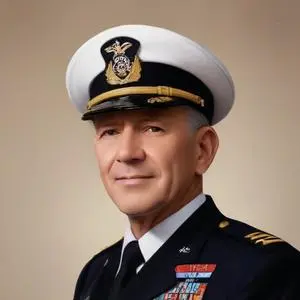
Eugene B. Fluckey: The Legendary Submarine Commander
A Career Marked by Bravery and Excellence
Eugene Bennett Fluckey, affectionately known as "Lucky Fluckey," was a United States Navy rear admiral who etched his name in history as one of the most decorated submarine commanders of World War II. With an impressive tally of the Medal of Honor and four Navy Crosses, Fluckey's remarkable career was a testament to his unwavering courage, tactical brilliance, and unrelenting dedication to his country.
Early Life and Education
Born on October 5, 1913, in Washington, D.C., Fluckey demonstrated an early aptitude for academic excellence, graduating from Western High School at the tender age of 15. To bridge the gap before college, his father sent him to the Mercersburg Academy in Pennsylvania, where he continued to excel. A proud member of the Boy Scouts, Fluckey achieved the esteemed rank of Eagle Scout. He later attended Columbian Preparatory School in Washington to prepare for the Naval Academy.
U.S. Navy Career
Fluckey entered the United States Naval Academy on June 13, 1931, and was commissioned as an Ensign on June 6, 1935. His initial assignments saw him serving aboard the battleship USS Nevada (BB-36) and the destroyer USS McCormick (DD-223). In June 1938, he reported for instruction at the Submarine School in New London, Connecticut, which marked the beginning of his remarkable journey as a submarine commander.
World War II and the USS Barb
Fluckey's wartime exploits are the stuff of legend. After completing five war patrols on the USS Bonita (SS-165), he attended the Prospective Commanding Officers School and later became the commanding officer of the USS Barb (SS-220) in January 1944. Under his leadership, the USS Barb earned the distinction of being one of the most successful submarines in the war, with Fluckey credited with sinking the second-highest tonnage of enemy shipping among all U.S. Naval skippers.
Awards and Honors
- Medal of Honor (1945)
- Four Navy Crosses
- Other decorations, including the Navy Distinguished Service Medal, the Legion of Merit, and the Bronze Star Medal
Legacy and Historical Context
Fluckey's remarkable career serves as a testament to the bravery and sacrifice of the Greatest Generation. His exploits on the USS Barb are a pivotal part of American naval history, and his legacy continues to inspire future generations of naval officers. As a pioneer in the field of submarine warfare, Fluckey's contributions to the development of underwater tactics and strategy remain unparalleled.
Personal Milestones and Key Life Events
- Graduated from the Naval Academy in 1935
- Became the commanding officer of the USS Barb in 1944
- Retired from active duty in 1960 with the rank of Rear Admiral
- Passed away on June 28, 2007, at the age of 93
Fluckey's remarkable life and career serve as a shining example of courage, dedication, and excellence. His unwavering commitment to his country and his craft has earned him a permanent place in the annals of American naval history.
FAQ
What were Eugene B. Fluckeys most notable naval achievements?
Eugene B. Fluckey was a decorated naval officer who served during World War II, earning the Medal of Honor for his heroism during the Battle of the Philippine Sea.
How did Eugene B. Fluckey get started in the Navy?
Eugene B. Fluckey began his naval career in 1935, graduating from the United States Naval Academy and serving on various ships before commanding a submarine during World War II.
What was Eugene B. Fluckeys experience during World War II?
Eugene B. Fluckey saw extensive action during World War II, participating in numerous battles and earning several decorations for his bravery, including the Medal of Honor.
Did Eugene B. Fluckey also serve during the Cold War?
Yes, Eugene B. Fluckey continued to serve in the Navy during the Cold War, commanding a submarine squadron and later serving as the Director of Naval Intelligence.
What legacy did Eugene B. Fluckey leave behind in the Navy?
Eugene B. Fluckey left behind a legacy of heroism and dedication to service, inspiring generations of naval officers and serving as a model of leadership and courage.