


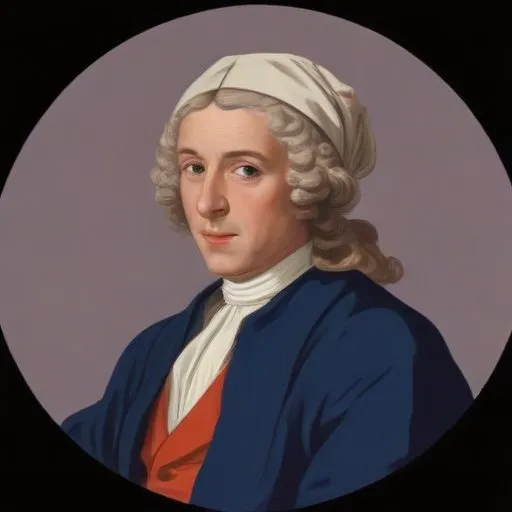
Eustache Le Sueur, a prominent French artist, is renowned for his exquisite paintings of religious subjects, which epitomize the neoclassical style of Parisian Atticism. His works, characterized by delicate lines, harmonious colors, and a deep sense of devotion, have earned him a special place in the annals of French art.
Born on November 19, 1617, in Paris, Le Sueur was raised in an artistic family. His father, Cathelin Le Sueur, was a skilled turner and sculptor in wood, who recognized his son's talent and encouraged him to pursue a career in art. Le Sueur's early training took place in the studio of Simon Vouet, a renowned French painter, where he rapidly distinguished himself with his exceptional skill and dedication.
In 1648, Le Sueur played a pivotal role in the establishment of the French Royal Academy of Painting and Sculpture, an institution that would become a bastion of artistic excellence in France. He was elected as one of the original twelve elders responsible for the academy's administration, a testament to his stature as an artist and his commitment to the advancement of French art.
Le Sueur's paintings, characterized by their elegance and refinement, adorn the walls of some of France's most prestigious institutions. His series of works on the Life of St. Bruno, executed in the cloister of the Chartreux, is considered one of his most personal and beautiful creations. The Martyrdom of St. Lawrence, from the church of Saint-Germain-de-l'Auxerrois, and St. Paul Preaching at Ephesus, painted for the goldsmiths' corporation in 1649, are just a few examples of his masterpieces that continue to inspire art lovers to this day.
Le Sueur's talent was not limited to religious subjects alone. He was commissioned to create a series of decorations for the Louvre, including works for the apartments of the king and queen. Although these paintings are now lost, their existence is recorded in Bailly's inventory of 1710, a testament to their significance in Le Sueur's oeuvre.
Le Sueur's neoclassical style, characterized by its emphasis on proportion, balance, and beauty, has had a profound impact on French art. His influence can be seen in the works of later artists, such as Jacques-Louis David and Jean-Auguste-Dominique Ingres, who drew inspiration from his delicate lines and harmonious colors. Today, Le Sueur's paintings continue to captivate art lovers, offering a glimpse into the beauty and elegance of 17th-century French art.
Eustache Le Sueur's life was a testament to his passion for art and his dedication to the pursuit of beauty. His paintings, characterized by their elegance and refinement, continue to inspire art lovers, offering a glimpse into the beauty and elegance of 17th-century French art.
Born in 1619
A dominant figure in 17th-century French art, he was a painter, art theorist, and director of the Gobelins Manufactory, creating grandiose and dramatic works that epitomized the French Baroque style. He wrote extensively on art theory, influencing generations of artists.
Born in 1732
A prolific Rococo painter and etcher, renowned for his delicate, whimsical, and often erotic works that capture the carefree spirit of 18th-century French aristocracy. His art often featured lush landscapes, gentle colors, and playful scenes of love and leisure.
Born in 1703
A prominent artist of the Rococo style, known for his delicate and ornate paintings, often depicting mythological and pastoral scenes, as well as designing sets for the Paris Opera.
Born in 1659
A prominent portrait painter of the French monarchy and aristocracy, capturing the essence of 17th and 18th century European royalty with exquisite detail and realism.
Born in 1656
A prominent 18th-century French painter and academic, known for his exquisite portraits of European aristocracy, showcasing remarkable attention to detail and realism.
