


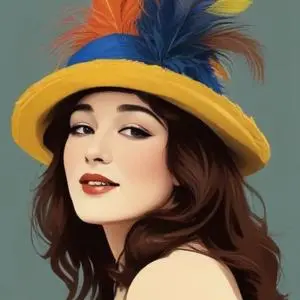
A popular model and actress in the early 20th century, known for her beauty and involvement in a highly publicized love triangle that led to a sensational murder trial.
Evelyn Nesbit, a striking beauty and talented performer, was at the center of a scandalous love triangle that captivated the nation in the early 20th century. Her tumultuous relationships with two of the most powerful men of her time, architect Stanford White and multimillionaire Harry Kendall Thaw, would ultimately lead to one of the most sensational murder trials in American history.
Born Florence Evelyn Nesbit on December 25, 1884, or 1885, in Pennsylvania, Nesbit began her career as an artist's model in Philadelphia at the tender age of 14. Her family soon moved to New York City, where she became a sought-after model for prominent artists, including James Carroll Beckwith, Frederick S. Church, and the famous Charles Dana Gibson, who idealized her as the quintessential "Gibson Girl."
Nesbit's beauty and charm soon translated to the stage, where she became a chorus girl and eventually a featured star on Broadway. Her performances caught the attention of wealthy patrons, including Stanford White, who would become a significant figure in her life.
In 1905, Nesbit married Harry Kendall Thaw, a multimillionaire 14 years her senior, despite his history of mental instability and abusive behavior. However, her relationship with Thaw was complicated by her ongoing affair with Stanford White, who had allegedly drugged and raped her when she was unconscious.
The love triangle came to a deadly end on June 25, 1906, when Thaw shot and killed White at the rooftop theatre of Madison Square Garden. The subsequent trial, dubbed the "Trial of the Century," was a media sensation, with Nesbit's testimony and the details of her relationships with both men captivating the nation.
The trial was a masterclass in sensational journalism, with newspapers devoting entire pages to the scandal. Nesbit's testimony, in which she alleged that White had drugged and raped her, was a turning point in the trial. Thaw's defense team argued that he had killed White in a fit of rage, driven by his own obsessive love for Nesbit and a desire to avenge her honor.
In the end, Thaw was found not guilty by reason of temporary insanity, but the trial's aftermath was far from over. Nesbit's reputation was forever linked to the scandal, and she would spend the rest of her life trying to escape its shadow.
After the trial, Nesbit toured Europe with a dance troupe and gave birth to a son, Russell Thaw, in 1906. She continued to perform on stage and screen, eventually making her way to Hollywood, where she worked as an actress and a dancer.
Despite her tumultuous past, Nesbit remained a beloved figure in American popular culture, symbolizing the glamour and excess of the Gilded Age. Her life served as a cautionary tale about the dangers of obsession and the destructive power of love.
Evelyn Nesbit's life was a whirlwind of passion, drama, and tragedy, but her legacy as a cultural icon and a symbol of American excess remains unrivaled to this day.
Born in 1853
Co-founder of a prominent architectural firm, renowned for designing iconic buildings like the Washington Square Arch and Madison Square Garden, blending classical and modern styles.
Born in 1882
A legendary stage and screen actor of the early 20th century, known for his charismatic performances in Shakespearean roles and iconic films like "Dr. Jekyll and Mr. Hyde".
Born in 1892
A pioneering actress, producer, and screenwriter who co-founded United Artists, revolutionizing the film industry with her creative vision and business acumen. She was a silent film star and one of the most popular actresses of her time.
Born in 1883
A swashbuckling pioneer of silent films, known for his daring stunts and charming on-screen presence, revolutionizing the action-adventure genre.
Born in 1889
A pioneer of silent film, he is renowned for his iconic "Little Tramp" character and groundbreaking work in writing, directing, and starring in his own movies.
Born in 1893
Pioneering silent film star and director, known for her iconic performances in classics like "The Birth of a Nation" and "Broken Blossoms".
Born in 1875
Pioneering filmmaker behind groundbreaking silent movies, credited with developing innovative camera techniques and narrative storytelling styles.
