


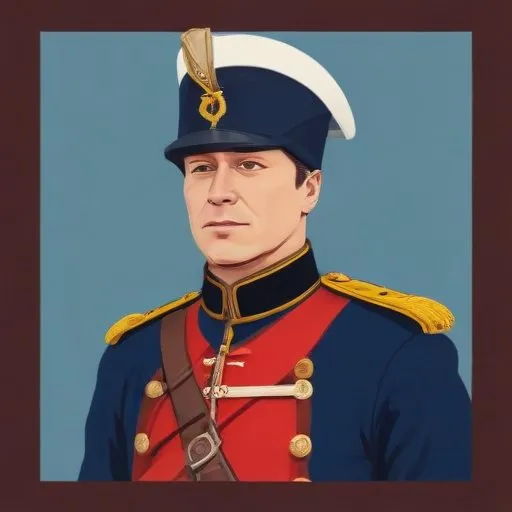
A 17th-century Swedish soldier who fought in the Thirty Years' War and later became a governor of Estonia, known for his military prowess and administrative skills.
Evert Horn, a name synonymous with bravery and strategic prowess, is renowned for his remarkable career as a Swedish Field Marshal and Governor of Narva during the tumultuous early 17th century. His valorous exploits on the battlefields of Estonia and Finland etched an indelible mark on Sweden's military history, cementing his status as a national hero.
Born on June 11, 1585, at Haapsalu Castle in the Swedish province of Estonia, Evert Horn was destined for greatness. As the son of Field Marshal Carl Horn and Agneta von Dellwig, he was groomed for military excellence from a tender age. His younger brother, Gustav Horn, would later follow in his footsteps, becoming a distinguished Field Marshal in his own right.
In 1608, Horn's exceptional skill and acumen earned him an assignment to serve under the esteemed Chief Commander in Finland, Jakob De la Gardie. This pivotal experience laid the groundwork for his remarkable ascension through the ranks. By 1613, he had risen to the position of Governor of Narva, and just a year later, he was appointed Field Marshal, solidifying his reputation as a master tactician.
Horn's most notable military campaign was the Ingrian War, a brutal conflict that ravaged the region. During the early days of the Swedish siege of Pskov in 1615, Horn's unwavering bravery was matched only by his tactical genius. Tragically, it was during this very siege that he fell to a bullet wound, his untimely death leaving a profound impact on the Swedish military and the nation as a whole.
In 1613, Horn married Margareta Fincke, daughter of Governor Gdik Fincke, with whom he had a son, Gustav Evertsson Horn af Marienborg. The younger Horn would go on to become a respected member of the Privy Council of Sweden and Governor General of Finland, ensuring his father's legacy lived on.
Evert Horn's remarkable life and achievements serve as a testament to the bravery, honor, and strategic brilliance that defined Sweden's Golden Age. His selfless dedication to his country and his unwavering commitment to the military left an indelible mark on Swedish history, inspiring generations to come.
In the annals of Swedish history, Evert Horn's name will forever be etched in gold, a shining exemplar of courage, loyalty, and military prowess. His life's work continues to inspire and captivate, a testament to the enduring power of human spirit and determination.
Born in 1583
Lord High Chancellor of Sweden who played a crucial role in shaping the country's government and military during the 17th century, known for his diplomatic skills and administrative reforms.
Born in 1603
A renowned 17th-century military leader, he led Swedish forces to several victories in the Thirty Years' War, earning recognition as one of the greatest generals in Swedish history.
Born in 1613
A renowned military leader and statesman, he played a crucial role in shaping Sweden's history, particularly during the Thirty Years' War, and held significant political offices.
