


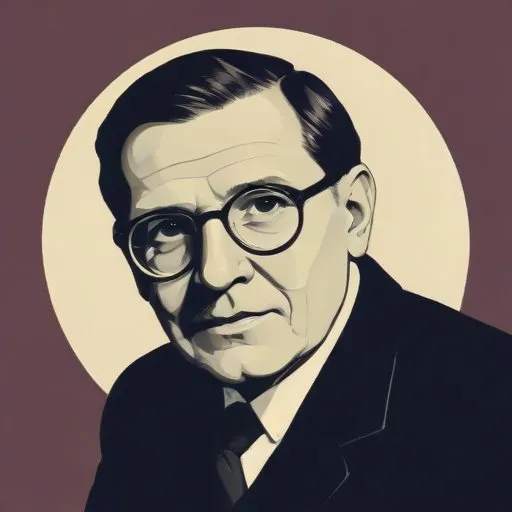
A professor, astronomer, and mathematician who made significant contributions to the fields of astronomy and mathematics, particularly in the calculation of celestial orbits. Known for his work on the orbits of comets and asteroids.
Ezra Otis Kendall is renowned for his groundbreaking work in uranography, a field that deals with the scientific study of the celestial bodies and their positions in the sky. His remarkable contributions to astronomy and mathematics have left an indelible mark on the scientific community.
Kendall was born on May 17, 1818, in Wilmington, Massachusetts, to Ezra Kendall and Susanna Cook Walker. His mother was a descendant of Mayflower passengers Francis Cooke and Stephen Hopkins. He moved to Philadelphia in 1835 to study mathematics under the guidance of his half-brother, Sears Cook Walker.
Kendall's passion for astronomy led him to become a professor of mathematics and astronomy at Philadelphia's Central High School in 1838. He also served as the director of the observatory, where he conducted extensive research on celestial bodies. His work in uranography resulted in the publication of Uranography or, A Description of the Heavens, a comprehensive atlas that showcased the positions of principal stars, clusters, and nebulae.
Kendall's outstanding contributions to science earned him several accolades. He was elected a member of the American Philosophical Society in 1842 and later served as its vice-president. In 1888, he received a Doctor of Laws (LL.D.) honorary degree from the University of Pennsylvania in recognition of his scientific achievements.
In addition to his academic pursuits, Kendall was a prolific writer who published several papers on astronomy and mathematics. His notable works include Observations of Enckes Comet and Transactions of the American Philosophical Society.
Kendall's pioneering work in uranography has inspired generations of astronomers and mathematicians. His contributions to the field of astronomy have helped shape our understanding of the celestial bodies and their movements. As a testament to his enduring legacy, Kendall's work continues to influence scientific research and education.
Kendall passed away on January 5, 1899, in Philadelphia, leaving behind a rich legacy that continues to inspire and motivate scientists and scholars to this day.
Born in 1835
Developed innovative astronomical tables and made significant contributions to the field of mathematics, particularly in the areas of celestial mechanics and economics.
Born in 1773
Pioneering mathematician and navigator who calculated the orbits of comets and developed new navigation techniques, revolutionizing maritime trade and exploration.
Born in 1806
Pioneering oceanographer who charted the world's oceans, creating the first accurate maps of sea currents and depths, revolutionizing navigation and commerce. Known as the "Pathfinder of the Seas".
Born in 1829
Discovered the moons of Mars, Phobos and Deimos, and made significant contributions to astronomy, particularly in the field of celestial mechanics.
Born in 1837
Pioneering astronomer who cataloged over 225,000 stars and developed a system for classifying them based on their spectra, revolutionizing the field of astrophysics.
