


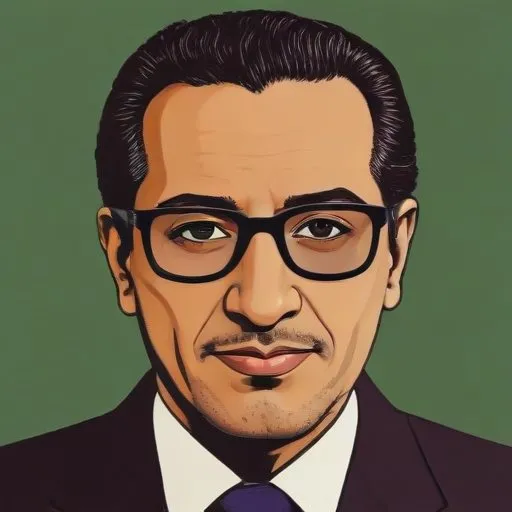
Renowned journalist and author, known for his influential writings on Arabic literature and culture, shaping the region's intellectual discourse.
Ezzat el Kamhawi, a renowned Egyptian novelist and journalist, has left an indelible mark on the literary world with his thought-provoking works, earning him the prestigious Naguib Mahfouz Medal for Literature in 2012. His novel, House of the Wolf, showcased his exceptional storytelling prowess, cementing his position as a literary force to be reckoned with.
Born on December 23, 1961, in Sharqia Governorate, Egypt, el Kamhawi's affinity for writing was evident from a young age. Before completing high school, he had already published articles in the Al Gomhuria newspaper, setting the stage for a remarkable career in journalism.
After graduating from the Department of Journalism in the Faculty of Mass Communications, Cairo University in 1983, el Kamhawi joined AlAkhbar, where he played a crucial role in establishing Akhbar AlAdab, a widely acclaimed literary magazine, 10 years later. His journalistic endeavors further expanded when he became the Senior Editor of alDoha Cultural Magazine from May 2011 to September 2013.
El Kamhawi's literary repertoire is characterized by its unique blend of history, mythology, and social commentary. His novel, The City of Pleasure, is a testament to his innovative storytelling approach, weaving a complex narrative that explores the intersection of pleasure, power, and morality.
Through his writing, el Kamhawi delves into the human condition, probing the complexities of human nature and the societal forces that shape our experiences. His works often tread the fine line between reality and fantasy, inviting readers to question the norms and conventions that govern our lives.
In recognition of his outstanding literary contributions, el Kamhawi has received several awards and accolades. In addition to the Naguib Mahfouz Medal for Literature, he was awarded the Samir Kassir Award for Freedom of the Press in the Opinion Piece category for his article, "Suspicious Architecture," in 2022.
El Kamhawi's literary works have not only resonated with readers but have also sparked critical discussions about the role of literature in shaping our understanding of the world. His writing has inspired a new generation of writers and intellectuals, encouraging them to challenge conventional narratives and explore alternative perspectives.
Through his contributions to literary magazines and journals, el Kamhawi has helped foster a vibrant literary community, promoting a culture of intellectual curiosity and creative expression.
El Kamhawi's life is a testament to his unwavering dedication to his craft. From his early days as a young journalist to his current status as a celebrated novelist, he has consistently pushed the boundaries of literary expression, inspiring countless individuals along the way.
His remarkable journey serves as a powerful reminder that the power of literature lies not only in its ability to entertain but also to educate, inspire, and challenge our perceptions of the world.
Ezzat el Kamhawi's literary legacy will undoubtedly continue to inspire future generations of writers, intellectuals, and thinkers. His contributions to Egyptian literature have earned him a permanent place in the annals of literary history, ensuring that his works will remain a vital part of the cultural heritage of the region.
As we reflect on his remarkable life and achievements, we are reminded that the true power of literature lies in its ability to transcend borders, challenge assumptions, and inspire new perspectives. Ezzat el Kamhawi's remarkable body of work is a testament to the transformative power of literature, inspiring us to reimagine the world and our place within it.
Born in 1918
Led Egypt through a period of rapid modernization and nationalism, becoming a symbol of Arab unity and resistance to Western influence. He nationalized the Suez Canal and implemented socialist reforms.
98 Years Old
The authoritarian leader who ruled Egypt for nearly three decades, suppressing opposition and maintaining a tight grip on power, while also maintaining a delicate balance of power in the Middle East. He's infamous for his regime's human rights abuses and corruption.
75 Years Old
Egypt's first democratically elected president, who served from 2012 to 2013 and was a key figure in the Arab Spring uprising, known for his Islamist ideology and brief, tumultuous tenure.
72 Years Old
Egypt's sixth president, a military leader who seized power in a coup, known for his authoritarian rule and human rights abuses. He has dominated Egyptian politics since 2013.
Born in 1911
Renowned Egyptian literary mastermind behind rich, poignant novels and plays that explore the human condition, earning the Nobel Prize in Literature in 1988.
Born in 1898
A pioneer of Arabic literature, he crafted plays and novels that explored the human condition, blending traditional Egyptian culture with modernist themes. His works continue to influence Middle Eastern literature and theatre.
80 Years Old
A pioneering chemist who developed a technique to observe molecular structures in real-time, earning him the Nobel Prize in Chemistry in 1999. His work has greatly advanced our understanding of chemical reactions.
