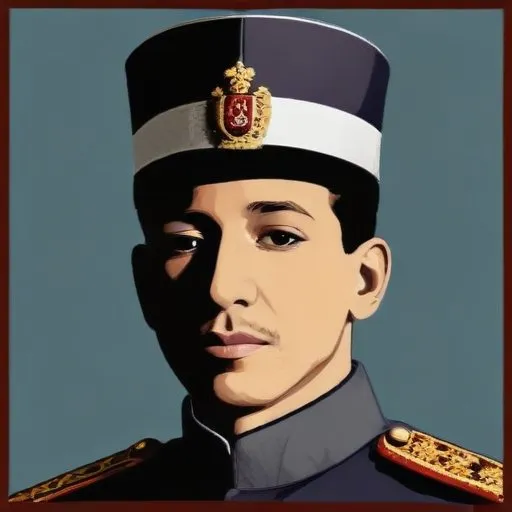
Faisal II of Iraq

Faisal II of Iraq

Faisal II of Iraq was born on May 2nd, 1935

Full Name: Faisal II bin Ghazi
Birth Date: May 2, 1935
Place of Birth: Baghdad, Iraq
Nationality: Iraqi
Occupation: King of Iraq
Reign: 1939-1958
Assassination: July 14, 1958
Royal House: Hashemite

The last monarch of the Hashemite Kingdom of Iraq, overthrown and executed in a coup at age 23, marking the end of the monarchy and the rise of a republican government.

Written by: Victor Malone Victor Malone

Faisal II of Iraq: The Last King of Iraq

Faisal II, the last king of Iraq, is remembered for his brief yet tumultuous reign, marked by his struggle to maintain power in the face of rising Arab nationalism and Communist influence. Born on May 2, 1935, Faisal II would go on to become the last monarch of the Hashemite dynasty, which had ruled Iraq since 1921.

Early Life and Accession

Faisal II was the son of King Ghazi I and Queen Aliya, and succeeded his father as king at the tender age of four after his assassination in 1939. Due to his youth, the Regent, Abd al-Ilah, assumed control of the government until Faisal came of age.

Reign and Challenges

Faisal II officially took the reins of power in 1953, but his reign was marked by instability and turmoil. He faced opposition from various quarters, including the growing Arab nationalist movement and the Communist Party, which sought to overthrow the monarchy and establish a republican government.

One of the most significant challenges Faisal faced was the 1958 Iraqi revolution, led by General Abd al-Karim Qasim, which ultimately led to the overthrow and execution of the royal family on July 14, 1958.

Philosophical Contributions and Beliefs

Despite his short reign, Faisal II attempted to introduce reforms aimed at modernizing Iraq's economy and infrastructure. He also sought to promote unity among the Arab states, a goal that was ultimately unrealized.

Faisal was known for his pro-Western stance, which put him at odds with the growing tide of Arab nationalism. His attempts to balance the demands of his Western allies with the needs of his own people ultimately proved unsuccessful.

Personal Milestones and Key Life Events

Faisal II married Princess Fadila bint Ghazi in 1953, but the couple had no children. His brief reign was marked by several key events, including the 1955 Baghdad Pact, which brought Iraq into an alliance with Turkey, Iran, Pakistan, and the United Kingdom.

Faisal's life was cut short when he was executed, along with his family, in the 1958 Iraqi revolution.

Historical Context and Legacy

Faisal II's reign and eventual overthrow mark a significant turning point in Iraqi history, as the country transitioned from a monarchy to a republic. His legacy serves as a reminder of the complex and often tumultuous nature of Middle Eastern politics.

Today, Faisal II is remembered as a symbol of a bygone era, a monarch who struggled to adapt to the changing tides of Arab nationalism and ultimately paid the ultimate price.

Trivia and Fun Facts

Timeline
1935
Birth of Faisal II
Faisal II of Iraq was born on May 2, 1935, to King Ghazi and Queen Aliya.
1939
Accession to Throne
Faisal II ascended to the throne of Iraq on April 4, 1939, after the death of his father.
1953
Coronation
Faisal II was formally crowned King of Iraq on May 2, 1953, marking the beginning of his reign.
1958
Rebellion and Assassination
A military coup led by General Abd al-Karim Qasim overthrew and killed Faisal II on July 14, 1958, ending the Hashemite dynasty in Iraq.
1958
Death
Faisal II died on July 14, 1958, during the rebellion, marking the end of the monarchy in Iraq.
Faisal II of Iraq

Faisal II of Iraq Quiz

Faisal II of Iraq was the last monarch of which kingdom?

Score: 0/5
FAQ
What was Faisal IIs reign like as the King of Iraq?
Faisal II was the last King of Iraq, reigning from 1939 until his assassination in 1958. His reign was marked by efforts to modernize Iraq and maintain its independence in the face of regional and global pressures.
How did Faisal II navigate Iraqs relationships with Western powers?
Faisal II maintained close relationships with Western powers, particularly the United Kingdom, while also pursuing a policy of Arab nationalism and independence. He navigated the complexities of Cold War politics and regional rivalries.
What were Faisal IIs efforts to modernize Iraq?
Faisal II introduced various modernization projects, including the development of infrastructure, education, and healthcare. He also supported the growth of the Iraqi economy and encouraged foreign investment.
How did Faisal II respond to the rise of Arab nationalism?
Faisal II acknowledged the growing popularity of Arab nationalism, attempting to balance his own monarchical authority with the demands of pan-Arabism. He supported Arab unity and cooperation, while maintaining Iraqs sovereignty.
What was Faisal IIs legacy in modern Iraqi history?
Faisal IIs legacy is complex and contested, with some viewing him as a modernizer and others seeing him as a symbol of monarchical oppression. His assassination marked the end of the Iraqi monarchy and the beginning of a new era in Iraqi politics.

Related People:

Saddam Hussein

89 Years Old

The authoritarian leader who ruled Iraq with an iron fist, notorious for his brutal suppression of dissent and invasion of neighboring countries.