


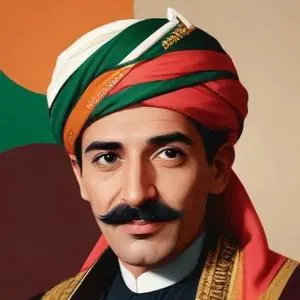
First king of modern Iraq, unifying the country and establishing a constitutional monarchy, known for his efforts to modernize and develop the nation.
Faisal I of Iraq, a name synonymous with Arab nationalism and unity, was the king of Iraq from 1921 until his untimely death in 1933. He is revered for his pivotal role in the Great Arab Revolt during World War I and his vision for a unified Arab state.
Born in Mecca, Ottoman Empire (present-day Saudi Arabia) in 1885, Faisal was the third son of Hussein bin Ali, the Grand Sharif of Mecca. Growing up in Constantinople, he was groomed for leadership by his father, learning the intricacies of governance and diplomacy.
In 1916, Faisal joined the Great Arab Revolt against the Ottoman Empire, alongside his father and brothers. With British assistance, they aimed to create an Arab state that would unify the fragmented regions of the Middle East. Faisal's military prowess and strategic thinking were instrumental in the revolt's success, earning him recognition as a leader among his peers.
In March 1920, the Syrian National Congress proclaimed Faisal king of the Arab Kingdom of Syria, rejecting French claims to a Mandate for Syria. Although his reign was short-lived, Faisal's vision for a unified Arab state resonated with the people, and he continued to advocate for Arab unity throughout his life.
In 1921, the British arranged for Faisal to become king of the newly created Kingdom of Iraq, under British administration. Faisal's primary objective was to foster unity between Sunni and Shiite Muslims, promoting pan-Arabism and a sense of national identity among the Iraqi people.
Faisal married Huzaima bint Nasser and had four sons, including Ghazi, who succeeded him as king of Iraq. He was known for his charisma, wit, and kindness, earning the respect and admiration of his people.
Faisal I of Iraq passed away on September 8, 1933, at the age of 48, while on a visit to Bern, Switzerland. He was succeeded by his eldest son, Ghazi, who continued his father's legacy of promoting Arab unity and independence.
Faisal I of Iraq's vision for a unified Arab state, his leadership during the Great Arab Revolt, and his efforts to modernize Iraq have left an indelible mark on the region's history. His legacy continues to inspire generations, serving as a beacon of hope for a more united and prosperous Arab world.
64 Years Old
The King of Jordan, known for promoting peace and stability in the Middle East, and for being a key ally to Western nations.
90 Years Old
King of Jordan from 1952 to 1999, known for his efforts to modernize and stabilize the country, as well as his role in Middle Eastern politics.
Born in 1919
The last monarch of the Pahlavi dynasty, ruling Iran from 1941 until the 1979 revolution, known for his modernization efforts and close ties to the West. His regime was marked by controversy, including a CIA-backed coup and brutal suppression of dissent.
