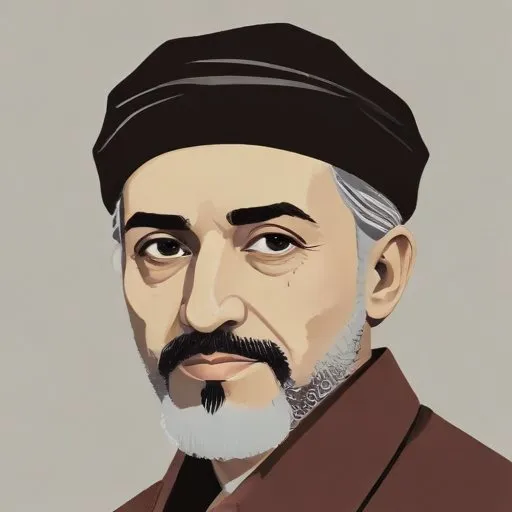
Faruk Nafiz Çamlıbel: A Leading Turkish Poet and Politician
A Voice of Turkish Literature and Politics
Faruk Nafiz Çamlıbel is renowned for his contributions to Turkish literature and politics, earning him a distinctive place in the country's cultural and political landscape. As one of the Five Syllabists, he played a significant role in shaping the Turkish poetry scene, and his later venture into politics saw him serve as a member of parliament for Istanbul.
Early Life and Education
Born on May 18, 1898, in Istanbul, Ottoman Empire, Faruk Nafiz was the son of Sleyman Nazif Bey, a public servant at the Ministry of Forestry, and Fatma Ruhiye, the daughter of a merchant named Necati Bey. He received his education from Bakırköy Secondary School and Hadıkai Mekteb-i Meveret High School. Although he initially pursued medicine, he abandoned his studies to work at the newspaper
Atı.
Literary Career
Faruk Nafiz's literary journey began with his contributions to the magazine
Byk Mecmua, which supported the Turkish Independence War between 1919 and 1920. He later wrote for the women's magazine
Süs from 1923 to 1924. His early poems, written in the aruz meter, were heavily influenced by Cenap Şahabettin and Yahya Kemal. However, he later shifted to the syllable meter, simplifying his style. Notable works from this period include
Dounun Sultanlar (1918),
Dinle Neyden and
Gnlden Gnle (1919).
Political Career and Later Life
Faruk Nafiz's political career began in 1946, when he joined the Democrat Party and served as a member of parliament for Istanbul for four consecutive terms. His political career was briefly interrupted by the 1960 military coup, during which he was arrested and imprisoned for 16 months. Upon his release, he continued to write, leaving behind a rich literary legacy.
Legacy and Impact
Faruk Nafiz Çamlıbel's contributions to Turkish literature and politics are undeniable. As a poet, he played a significant role in shaping the country's literary landscape, while his political career saw him serve as a dedicated representative of his people. His life, marked by both creative expression and public service, serves as an inspiration to future generations.
Personal Life and Milestones
- Faruk Nafiz was born on May 18, 1898, in Istanbul, Ottoman Empire.
- He graduated from Bakırköy Secondary School and Hadıkai Mekteb-i Meveret High School.
- He was a member of the Turkish Parliament for the Democrat Party from 1946 to 1960.
- He was imprisoned for 16 months following the 1960 military coup.
- He passed away on November 8, 1973, and was buried at Zincirlikuyu Cemetery on November 11.
Trivia and Fun Facts
- Faruk Nafiz was part of the group known as the Five Syllabists, a prominent literary circle in Turkey.
- He co-wrote the lyrics of the Tenth Anniversary March with Behet Kemal Çırar.
- His work was heavily influenced by Turkish literary giants Cenap Şahabettin and Yahya Kemal.
By examining the life and works of Faruk Nafiz Çamlıbel, we gain insight into the complexities of Turkish literature and politics during the early 20th century. His enduring legacy serves as a testament to the power of creative expression and public service.
FAQ
What themes does Faruk Nafiz Çamlıbels poetry explore?
Faruk Nafiz Çamlıbels poetry explores themes of love, nature, and social justice, often using symbolism and imagery to convey complex emotions and ideas.
What impact did Faruk Nafiz Çamlıbel have on Turkish literature?
Faruk Nafiz Çamlıbels work had a significant impact on Turkish literature, introducing modernist techniques and influencing later generations of Turkish poets and writers.
What is Faruk Nafiz Çamlıbels most famous work?
Faruk Nafiz Çamlıbels most famous work is the poetry collection Üç Şaire Dair (About Three Poets), which showcases his unique style and exploration of Turkish culture.
What was Faruk Nafiz Çamlıbels role in Turkish theatre?
Faruk Nafiz Çamlıbel was not only a poet but also a playwright, and his plays often explored themes of social commentary and critique of Turkish society.
How did Faruk Nafiz Çamlıbels education shape his writing?
Faruk Nafiz Çamlıbels education in Turkish and French literature influenced his writing, introducing him to modernist movements and shaping his unique style.