


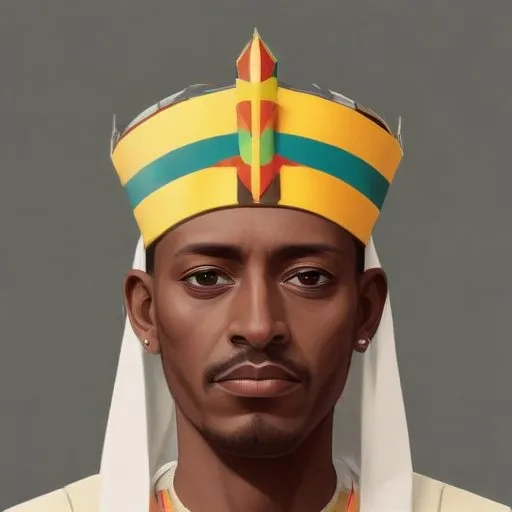
He founded the city of Gondar, which became the capital of Ethiopia, and is credited with establishing a period of stability and prosperity in the country.
Fasilides, also known as Fasil, Basilide, or Basilides, was the Emperor of Ethiopia from 1632 to 1667, renowned for founding the city of Gondar, the capital of the Ethiopian Empire, and ushering in the Gondarine period. During his reign, he made significant contributions to the country's architecture, religion, and politics, leaving a lasting legacy in Ethiopian history.
Born on November 20, 1603, in Magezez, Bulga, Shewa region, Fasilides was the son of Emperor Susenyos I and Empress Sahle Work Geez. His paternal grandfather's name was also Fasilides. He was of Amhara descent and a member of the Solomonic dynasty.
Fasilides was proclaimed emperor in 1630 during a revolt led by Sarsa Krestos, but did not reach the throne until his father abdicated in 1632. Upon assuming power, he immediately restored the official status of the traditional Ethiopian Orthodox Church, restoring the ancient relationship with the patriarch of Alexandria. He also confiscated the lands of the Jesuits at Dankaz and elsewhere in the empire, exiling them to Fremona.
Fasilides played a crucial role in leading the campaign against the Agaw rebels and established security alliances with neighboring Islamic sultanates. He also built the Fasil palace, a testament to his architectural prowess.
In 1666, Fasilides faced a significant challenge when his son, Dawit, rebelled against him. The emperor had his son imprisoned in Wehni, but a year later, he himself passed away on October 18, 1667, and was laid to rest in a monastery on Daga Island in Lake Tana.
Fasilides' legacy extends beyond his architectural achievements. He strengthened the Ethiopian Orthodox Church, promoted national unity, and fostered diplomatic relations with neighboring nations. His reign marked the beginning of the Gondarine period, which saw significant cultural, economic, and political developments in Ethiopia.
Fasilides' remarkable reign has left an indelible mark on Ethiopian history, and his legacy continues to inspire generations to come.
Born in 1892
The last emperor of Ethiopia, who led the country through a period of modernization and was a symbol of African independence, and is also revered as a deity by the Rastafari movement.
