


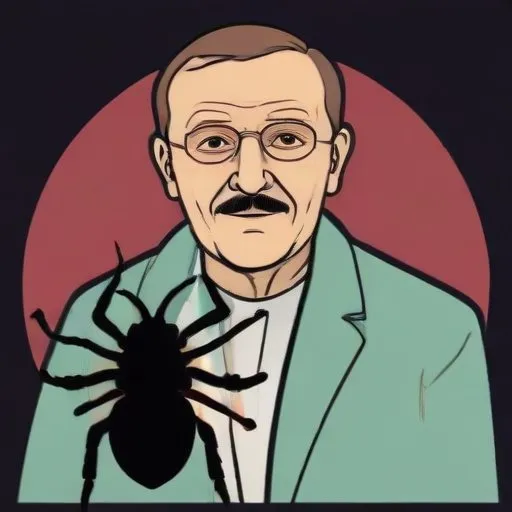
A Dutch arachnologist who discovered and described numerous spider species, significantly contributing to the field of arachnology.
Father Chrysanthus, a Dutch priest and biology teacher, is renowned for his pioneering studies in arachnology, particularly on the spiders of the Netherlands and New Guinea. His extensive research and publications on the subject have earned him a lasting legacy in the field of entomology.
Wilhelmus Egbertus Antonius Janssen, later known as Father Chrysanthus, was born on September 1, 1905, in Mill, North Brabant. He attended a minor seminary from 1918 to 1924 and joined the Order of Friars Minor Capuchin on September 7, 1924. After completing his studies in philosophy and theology, he was ordained on March 12, 1932.
Father Chrysanthus taught biology at the minor seminary, now known as Sint-Oelbertgymnasium, from 1932 to 1972. It was during this period that he developed an interest in spiders, inspired by Fritz Lock's book "Aus dem leben der Spinnen" (1939). He began writing for magazines like "De Levende Natuur" and eventually published several books on arachnids, including "Spinachtigen en Duizendpoten" (Arachnids and Centipedes) in 1950.
Father Chrysanthus's magnum opus, "Nederlandse Spinnen" (Dutch Spiders), was first published in 1954 and went on to have three more editions, with the last one being published in 1980. His work on New Guinea spiders, which began in 1957, was a result of his collaboration with Brother Monulf, a missionary who collected spider specimens during his work in Western New Guinea. Father Chrysanthus's research and publications have been widely acclaimed, with Dutch entomologist Barend Lempke praising all four editions of his book.
In recognition of his contributions to arachnology, two spider species were named in Father Chrysanthus's honor after his death on May 4, 1972. His legacy continues to inspire researchers and enthusiasts in the field, leaving behind a testament to his dedication and passion for the study of spiders.
While Father Chrysanthus's words are not extensively documented, his passion for nature and his dedication to his research are a testament to his inspirational spirit.
Father Chrysanthus's work in arachnology coincided with a growing interest in the field during the mid-20th century. His research and publications not only contributed to the understanding of spiders in the Netherlands and New Guinea but also paved the way for future generations of arachnologists.
Today, Father Chrysanthus is remembered as a pioneer in the field of arachnology, and his work continues to inspire and educate researchers and enthusiasts around the world.
Born in 1848
French naturalist who discovered and described numerous species of spiders, insects, and arachnids, significantly contributing to the field of arachnology.
Born in 1647
A pioneering female naturalist and artist who traveled to Suriname to study and illustrate the region's exotic insects and plants, producing groundbreaking work that merged art and science.
