


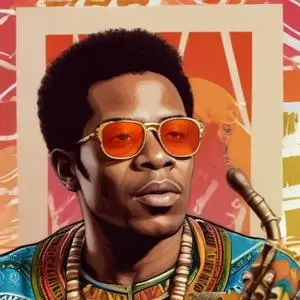
A pioneering Afrobeat musician and human rights activist who used his music as a powerful tool to criticize government corruption and social injustice.
Fela Kuti, also known as Abami Eda, is a Nigerian musician, bandleader, composer, political activist, and Pan-Africanist, renowned for his pioneering work in creating the Afrobeat genre, a fusion of West African music with African-American funk and jazz.
Consistently challenging and charismatic, Kuti was an outspoken critic of Nigeria's military government and a thorn in the side of successive regimes, using his music as a powerful tool for social and political commentary.
Born Olufela Olusegun Oludotun Ransome-Kuti on October 15, 1938, in Abeokuta, Nigeria, Fela was the son of Nigerian women's rights activist Funmilayo Ransome-Kuti and Rev. Israel Oludotun Ransome-Kuti, an Anglican minister and school principal.
Kuti's early experiences abroad, studying music in London and later in the United States, significantly influenced his musical style, leading him to create Afrobeat, a unique blend of traditional Yoruba music, jazz, and fu
In 1970, Kuti founded the Kalakuta Republic, a commune that declared itself independent from Nigeria's military government, and his band, Africa 70, featuring drummer and musical director Tony Allen.
The commune, which served as a recording studio, hospital, and home for Kuti and his band, became a symbol of resistance against the government, leading to repeated raids and harassment by the authorities.
Kuti's music addressed various social and political issues, including government corruption, oppression, and inequality. His most famous songs, such as "Zombie" and "Coffin for Head of State," were scathing critiques of the government.
Kuti's activism extended beyond his music. He was an ardent Pan-Africanist, advocating for African unity and self-determination. His music and message resonated with people across Africa and beyond, earning him international recognition and admiration.
In 1984, Kuti was jailed by the government of Muhammadu Buhari for allegedly attempting to travel to the United States without valid documents. He was released after 20 months, but the experience had a profound impact on his life and music.
Kuti continued to record and perform throughout the 1980s and 1990s, despite the challenges he faced. His music remained a powerful force for social change, influencing generations of musicians and activists.
Fela Kuti's legacy extends far beyond his music. He was a true original, a courageous and uncompromising artist who challenged the status quo and fought for social justice.
Today, Kuti's music continues to inspire and influence new generations of musicians, from Afrobeat revivalists to jazz and hip-hop artists. His life and work serve as a testament to the power of music as a tool for social change and a beacon of hope for a better future.
81 Years Old
A legendary musician who spread messages of unity, love, and social justice through reggae music, leaving a lasting impact on the global music scene.
82 Years Old
A pioneering reggae musician and activist, known for his powerful voice, guitar playing, and advocacy for social justice and cannabis legalization.
87 Years Old
A legendary South African jazz master and anti-apartheid activist, known for his soulful trumpet playing and iconic songs like "Grazing in the Grass" and "Bring Him Back Home".
94 Years Old
A legendary singer-songwriter and actress who used her powerful voice to fight against apartheid and racism, becoming a symbol of hope and freedom for many.
80 Years Old
A Nigerian music legend, known for his innovative blend of traditional Yoruba music, jazz, and fuji, creating a unique sound that has captivated audiences worldwide. He's a master guitarist and singer-songwriter with a prolific career spanning over 50 years.
