


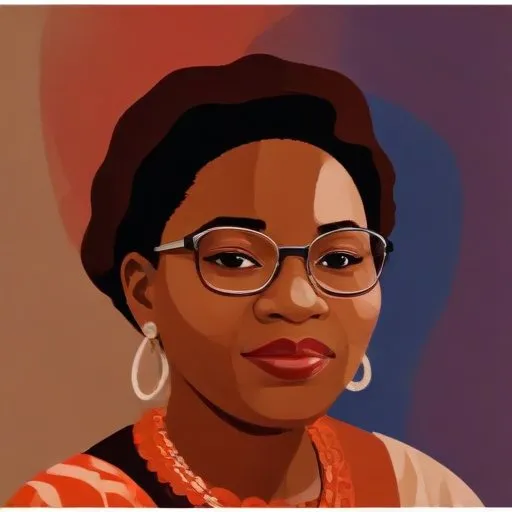
A pioneering Nigerian educator and women's rights activist who fought for independence and social justice, empowering women and challenging colonial powers.
Known as the "Lioness of Lisabi," Funmilayo Ransome-Kuti was a pioneering Nigerian educator, political campaigner, and women's rights activist who dedicated her life to fighting for women's empowerment and independence in Nigeria. Through her tireless efforts, she became a symbol of resistance against oppression, earning her numerous accolades and international recognition.
Born on October 25, 1900, in Abeokuta, Ogun State, Nigeria, Funmilayo was the first female student to attend the Abeokuta Grammar School. As a young adult, she worked as a teacher, organizing some of the first preschool classes in the country and arranging literacy classes for low-income women. This early work laid the foundation for her future activism, as she witnessed firsthand the struggles faced by women in her community.
In the 1940s, Funmilayo established the Abeokuta Women's Union, which advocated for women's rights, demanding better representation of women in local governing bodies and an end to unfair taxes on market women. She led marches and protests, often with up to 10,000 women, forcing the ruling Alake to temporarily abdicate in 1949. Her unwavering determination earned her the respect and admiration of her community, as well as international recognition.
As Funmilayo's political influence grew, she took part in the Nigerian independence movement, attending conferences and joining overseas delegations to discuss proposed national constitutions. She played a pivotal role in the creation of the Nigerian Women's Union and the Federation of Nigerian Women's Societies, advocating for Nigerian women's right to vote. Her contributions to the fight for independence earned her the Lenin Peace Prize and membership in the Order of the Niger.
Funmilayo's children went on to become prominent figures in Nigerian society. Her son, Fela Kuti, was a renowned musician and social critic, while her other sons, Beko Ransome-Kuti and Olikoye Ransome-Kuti, became a doctor and activist, and a health minister, respectively. Despite her passing in 1978, Funmilayo's legacy continues to inspire generations of Nigerians, women, and activists worldwide.
"We will no longer be treated like sheep, but will fight for our rights like lions."
Funmilayo Ransome-Kuti's life and work are a testament to the power of grassroots activism and the importance of women's empowerment in the fight for independence. Her fearless advocacy for women's rights, education, and social justice has inspired generations of Nigerians and continues to be celebrated today.
Funmilayo Ransome-Kuti's remarkable life is a shining example of the impact one person can have on their community and the world. Her unwavering commitment to fighting for women's rights and social justice is a powerful motivator for anyone seeking to make a difference in their own life and the lives of others.
Born in 1909
A Nigerian lawyer and politician who played a key role in the country's independence movement and was a strong advocate for democracy and education. He's also known for his efforts to develop Nigeria's economy and infrastructure.
Born in 1904
First President of Nigeria, leading the country to independence from British colonial rule and shaping its early years as a sovereign nation.
Born in 1909
First President of Ghana, leading the country to independence from British colonial rule and promoting Pan-Africanism. He's known for his vision of a united Africa and his role in shaping modern Ghana.
Born in 1922
First President of Tanzania, led the country to independence from British colonial rule and implemented socialist policies, known for his Pan-Africanism and anti-colonialism efforts.
Born in 1924
African revolutionary and founder of Guinea-Bissau, leading the country to independence from Portugal through a decade-long guerrilla war. He's revered for his pan-Africanist vision and anti-colonial leadership.
Born in 1925
The first Prime Minister of the Democratic Republic of the Congo, a key figure in the country's struggle for independence from Belgium, and a symbol of African nationalism. He played a crucial role in shaping the country's early years, but his life was cut short by assassination.
