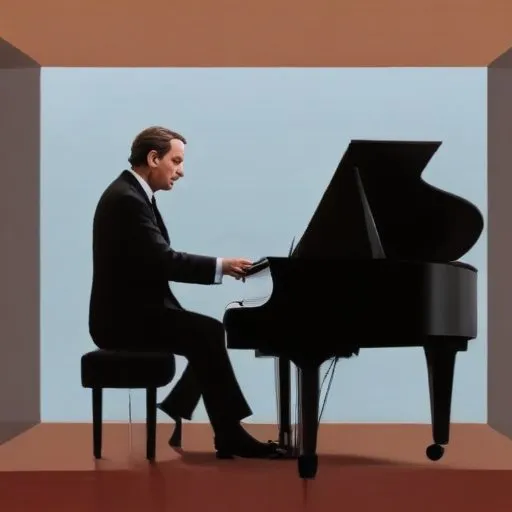
Ferde Grof: The Maestro Behind the Grand Canyon Suite
A Life of Melodic Mastery
Ferde Grof, the renowned American composer, arranger, pianist, and instrumentalist, is best known for his iconic 1931 symphonic poem,
Grand Canyon Suite, and orchestrating
George Gershwin's
Rhapsody in Blue for its 1924 premiere. With a career spanning over four decades, Grof's contributions to classical music are still celebrated and revered today.
A Family of Musicians
Born on March 27, 1892, in New York City to German immigrants, Grof came from a long line of classical musicians. His father, Emil von Grof, was a baritone who sang mainly light opera, while his mother, Elsa Johanna Bierlich von Grof, was a professional cellist and music teacher. Grof's maternal grandfather, Bernard Bierlich, was a cellist in the Metropolitan Opera Orchestra in New York, and his maternal uncle, Julius Bierlich, was the first violinist and concertmaster of the Los Angeles Symphony.
Musical Education and Early Beginnings
After his father's passing in 1899, Grof's mother took him abroad to study piano, viola, and composition in Leipzig, Germany. He became proficient in a wide range of instruments, including the piano, violin, viola, baritone horn, alto horn, cornet, and drums. This command of musical instruments and composition laid the foundation for Grof to become, first, an arranger of other composers' music, and then a composer in his own right.
A Diverse Career Path
Before devoting himself fully to music, Grof worked various jobs, including as a milkman, truck driver, usher, newsboy, elevator operator, and helper in a book bindery. He even played in a piano bar for two dollars a night and worked as an accompanist. At 15, he began performing with dance bands, and by 17, he wrote his first commissioned work,
Elks Grand Reunion March-Twostep.
Rise to Prominence
Grof's big break came when he orchestrated Gershwin's
Rhapsody in Blue for its 1924 premiere. This collaboration led to increased recognition, and he went on to compose his most famous work, the five-movement
Grand Canyon Suite, in 1931. This symphonic poem, inspired by the majestic beauty of the Grand Canyon, cemented Grof's reputation as a master composer.
Legacy and Impact
Throughout his life, Grof's music was characterized by its lyricism, humor, and ability to evoke a sense of place. His contributions to American classical music are undeniable, and
Grand Canyon Suite remains a beloved staple in the classical music repertoire. Ferde Grof's legacy continues to inspire generations of musicians and music lovers alike.
Quotes and Memorabilia
- "Music is the divine way to tellbeautiful, poetic things to the heart." - Ferde Grof
- A signed manuscript of Grand Canyon Suite is housed in the Library of Congress.
Awards and Honors
- Inducted into the American Classical Music Hall of Fame (2003)
- Received an honorary doctorate from the University of Arizona (1964)
Personal Milestones and Key Life Events
- Changed his name to Ferdie Grof during the 1920s and 1930s.
- Became a naturalized U.S. citizen in 1921.
- Passed away on April 3, 1972, at the age of 80.