


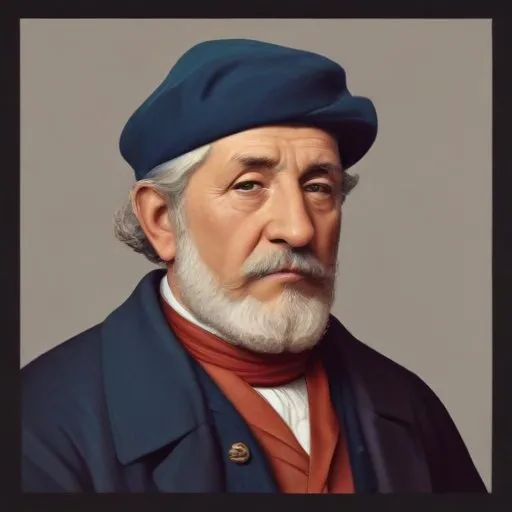
A French engineer who pioneered the industrial production of art bronze, creating intricate and precise replicas of famous sculptures, making art more accessible to the masses.
Ferdinand Barbedienne was a renowned French metalworker and manufacturer, celebrated for his expertise in creating exquisite bronze replicas of antique statues. Through his innovative partnership with Achille Collas, Barbedienne democratized art, making it accessible to households across Europe.
Born on August 6, 1810, in Calvados, France, Barbedienne was the son of a small farmer. He began his career as a dealer in wallpaper in Paris, but his entrepreneurial spirit soon led him to explore new opportunities.
In 1838, Barbedienne partnered with Achille Collas, who had just invented a machine to create miniature bronze replicas of statues. This collaboration marked the beginning of a revolutionary era in art reproduction. Together, they started a business selling miniatures of antique statues from museums across Europe, making art more accessible to the masses.
In 1843, Barbedienne and Collas expanded their scope by reproducing the work of living artists. They also diversified their product line by creating enamelled household objects, showcasing their versatility and adaptability in the metalworking industry.
During the Franco-Prussian War in 1870, the firm faced a critical shortage of metals, forcing them to pivot and focus on cannon founding. However, following the war, they resumed their business, undeterred by the challenges they had faced.
After Barbedienne's passing on March 21, 1892, he was buried in the Père Lachaise cemetery. His nephew, Gustave Leblanc, carried on the firm until 1952, ensuring the continued success of the business.
Among the prominent artists whose work was reproduced by Barbedienne's firm were Antoine Louis Barye and Auguste Rodin. His collaborations with these masters of their craft further solidified his reputation as a visionary in the world of bronze founding.
Barbedienne's innovative approach to art reproduction played a significant role in democratizing art, making it more accessible to the general public. His legacy continues to inspire artists, manufacturers, and art enthusiasts alike, serving as a testament to the power of entrepreneurship and creativity.
Ferdinand Barbedienne's remarkable journey serves as a beacon of inspiration, reminding us that innovation, perseverance, and a passion for art can leave a lasting impact on the world.
