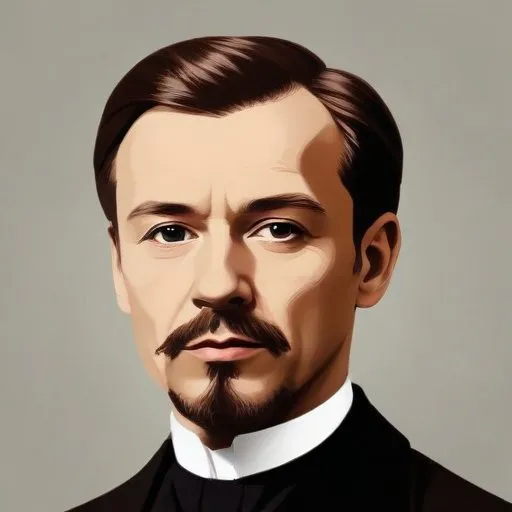
Ferdinand Hummel: The Forgotten Genius of German Opera
A Child Prodigy's Rise to Fame
Ferdinand Hummel was a German composer, harp virtuoso, pianist, and conductor who left an indelible mark on the world of music. Born on September 6, 1855, in Berlin, Hummel's talent was evident from a very young age, and he began his musical training under the guidance of his father, a flute player in the Royal Orchestra in Berlin.
A Royal Grant and a Journey to Vienna
At the age of seven, Hummel's exceptional talent earned him a King Wilhelm von Preussen Stipendium, which enabled him to study with Antonio Zamara at the Gesellschaft der Musikfreunde in Vienna. This opportunity not only refined his skills but also exposed him to the rich cultural heritage of Austria.
Tours and Performances
From 1864 to 1867, Hummel embarked on an extensive tour of South and North Germany, Denmark, Sweden, Norway, and Russia with his father. During this period, he was hailed as a great harp virtuoso, captivating audiences with his mesmerizing performances.
Education and Institutional Affiliations
Hummel's educational pursuits continued at the New Academy of Music in Berlin,
Theodor Kullak's institute, from 1868 to 1875. He later attended the Royal High School for Music and Composition, where he was mentored by
Woldemar Bargiel and Friedrich Kiel.
A Career in Music
After completing his education, Hummel's professional career took off as a harp player in B. Bilse's Orchestra, which later became the Berlin Philharmonic Orchestra. In 1892, he was appointed leader of the stage music at the Royal Theatre in Berlin, a position he held until 1917.
Operatic Contributions
As a composer, Hummel was remarkably prolific, producing operas, chamber music, piano pieces, and choral works. His operas, in particular, are noteworthy for their German equivalent to the Italian Verismo style, popularized by Puccini, Mascagni, and Leoncavallo. Some of his notable operas include:
- Mara, Op. 61 (1893)
- Angla, Op. 60 (1894)
- Ein treuer Schelm (A Faithful Rogue, Op. 64) (1894)
- Assarpai, Op. 65 (1898)
- Sophie von Brabant (Sophie from Brabant, Op. 66) (1899)
- Die Beichte (The Confession, Op. 69) (1900)
- Die Gefilde der Seligen (The Field of the Holy Ones, Op. 70) (1917)
- Jenseits des Stroms (On the Other Side of the Stream, Op. 71) (1922)
A Legacy Forgotten
Despite his significant contributions to German opera, Hummel's music has largely fallen into oblivion. However, his operas continue to hold cultural significance, offering a unique glimpse into the German equivalent of the Italian Verismo style.
A Life Well-Lived
Ferdinand Hummel passed away on April 24, 1928, in Berlin, leaving behind a legacy that, although forgotten, remains a testament to his boundless talent and dedication to the world of music.
FAQ
What were Ferdinand Hummels contributions to music?
Ferdinand Hummel was a German pianist, composer, and conductor who made significant contributions to the world of music. He was known for his technical skill and expressive playing style.
What was Ferdinand Hummels relationship with the Berlin Opera?
Hummel was a long-time conductor at the Berlin Opera, where he premiered many important works and was known for his innovative productions.
What were Ferdinand Hummels most famous compositions?
Hummel was a prolific composer who wrote many works, including symphonies, piano concertos, and chamber music. His most famous compositions include his Piano Concerto No. 1 and his Symphony No. 2.
What was Ferdinand Hummels teaching career like?
Hummel was a respected teacher who taught at several institutions, including the Berlin Conservatory. He was known for his demanding but effective teaching style.
What is Ferdinand Hummels legacy in music?
Hummel is remembered as a talented and influential musician who made significant contributions to the world of music. His compositions are still performed today, and he is celebrated as one of the most important German musicians of the 19th century.