


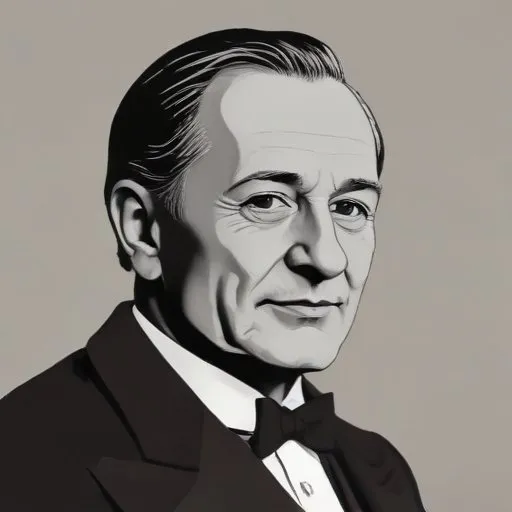
A renowned pianist, composer, and educator who made significant contributions to the development of piano pedagogy and founded the Neue Akademie der Tonkunst in Berlin. He's known for his influential piano methods and compositions.
Theodor Kullak, a German pianist, composer, and teacher, is renowned for his exceptional talent, influential compositions, and esteemed teaching methods. Born on September 12, 1818, in Krotoschin, Grand Duchy of Posen, Kullak's musical journey began at a young age, capturing the attention of Prince Anton Radziwill, who recognized his prodigious talent.
Kullak's early piano studies were under the guidance of Albrecht Agthe in Posen. His exceptional talent earned him an opportunity to perform at the Berlin court concert in 1829, accompanied by soprano singer Henriette Sontag. This performance impressed King Frederick William IV, who presented Kullak with thirty Friedrichs dor. The Prince Radziwill then sponsored Kullak's school fees in Sulechów, providing him with a well-rounded education.
Kullak's musical career was marked by his studies under renowned musicians such as Carl Czerny, Otto Nicolai, and Simon Sechter in Vienna. He was also heavily influenced by Franz Liszt and Adolf von Henselt. In 1842, Hermine von Massow's intercession led to King Frederick William IV providing Kullak with 400 thaler for piano studies, allowing him to focus on his musical vocation.
Kullak's teaching methods and compositions had a profound impact on the music world. He was a prolific composer, creating numerous works for piano, including sonatas, etudes, and waltzes. His students, including the famed pianist and composer, Xaver Scharwenka, benefited from his expertise and went on to achieve great success.
Kullak's influence extended beyond his compositions and teaching. He was a pioneer in shaping the music education system in Germany, advocating for a more systematic approach to music pedagogy. His legacy continues to inspire musicians and educators, solidifying his place as one of the most important figures in the history of music education.
Kullak's life was not without its challenges. He faced setbacks, including the loss of Prince Radziwill's patronage at a young age. However, he persevered, finding new patrons and opportunities that enabled him to pursue his passion for music. His determination and talent eventually led him to become a respected figure in the music world.
Theodor Kullak's remarkable journey, marked by his incredible talent, perseverance, and contributions to music education, continues to inspire generations of musicians and educators. His legacy serves as a testament to the power of passion, dedication, and hard work in achieving greatness.
Born in 1811
A virtuosic pianist and composer who revolutionized classical music with his technically demanding and emotionally expressive works, blending Hungarian folk influences with Romantic-era drama.
Born in 1809
A renowned 19th-century musician who masterfully blended classical and romantic styles, creating iconic works like the "Wedding March" and "Elijah" oratorio. His compositions continue to inspire and influence generations of artists.
Born in 1810
A renowned Romantic-era composer and influential music critic, known for his expressive and emotionally charged works, including symphonies, piano music, and art songs.
Born in 1833
A renowned pianist and composer, he crafted complex, expressive works that blended traditional and innovative techniques, leaving an indelible mark on classical music.
Born in 1819
A renowned 19th-century pianist and composer, she was one of the first females to achieve recognition in a male-dominated field, creating over 60 pieces of music. Her compositions showcased romanticism and lyricism.
Born in 1813
A renowned composer of iconic operas like La Traviata and Aida, known for his masterful blending of drama and music. His works continue to captivate audiences worldwide.
Born in 1813
A revolutionary composer who transformed opera with his epic, mythological works, creating a new era of musical storytelling. His iconic operas, such as "Der Ring des Nibelungen," continue to captivate audiences worldwide.
Born in 1803
A French Romantic-era mastermind who composed iconic symphonies, operas, and orchestral works, revolutionizing classical music with his bold, expressive style.
