


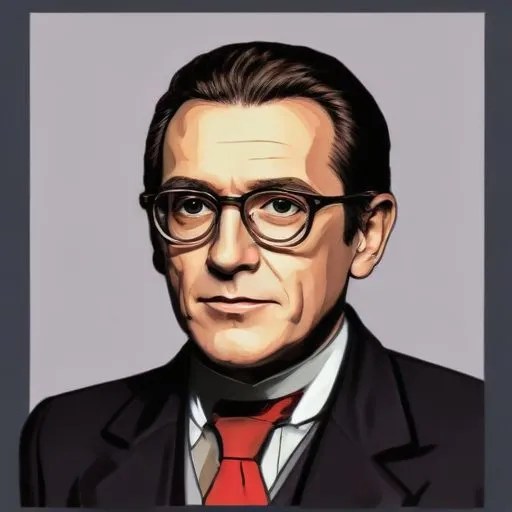
A renowned pianist and composer who wrote over 1,000 works, including piano exercises and symphonies, and was a prominent teacher to many famous composers. His compositions and teaching methods remain influential in classical music education.
Carl Czerny was a Austrian composer, teacher, and pianist of Czech origin who made significant contributions to the world of music, bridging the late Classical and early Romantic eras. With a vast musical production of over a thousand works, his books of studies for the piano remain widely used in piano teaching to this day.
Born on February 21, 1791, in Vienna's Leopoldstadt, Czerny was baptized in St. Leopold parish. His father, Wenzel, was of Czech origin, and his mother was Moravian. The Czerny family was steeped in music, with his grandfather being a violinist and his father an oboist, organist, and pianist.
At the tender age of three, Czerny began playing the piano, and by seven, he was already composing music. His father taught him the works of Bach, Haydn, and Mozart, and he began performing piano recitals in his parents' home. In 1800, he made his first public performance, playing Mozart's Piano Concerto No. 24 in C minor.
In 1801, Czerny's talent was presented to Ludwig van Beethoven at the latter's home. Beethoven was impressed with the 10-year-old's skills and accepted him as a pupil. Czerny remained under Beethoven's tutelage until 1804 and sporadically thereafter.
Czerny was in awe of Beethoven's exceptional abilities, including his facility at improvisation, expertise at fingering, rapidity of scales and trills, and restrained demeanor while performing. This period of study had a profound impact on Czerny's development as a composer and pianist.
Czerny went on to become a renowned teacher, counting among his students the famous composer and pianist Franz Liszt. He wrote numerous books of studies for the piano, including the iconic "The Art of Finger Dexterity," which remains a staple of piano pedagogy.
As a composer, Czerny was prolific, producing over a thousand works, including symphonies, piano sonatas, and chamber music. His music, although not as widely recognized as some of his contemporaries, is characterized by its technical complexity and lyricism.
Czerny's contributions to music pedagogy and composition have had a lasting impact on the development of piano music. His books of studies continue to be used by pianists worldwide, and his compositions, although not as widely performed, remain an important part of the classical music repertoire.
Through his teaching and compositions, Czerny played a significant role in shaping the course of classical music, influencing generations of pianists and composers. Today, he is remembered as one of the most important figures in the transition from the Classical to the Romantic era.
Born in 1770
A musical genius who expanded the possibilities of classical music, creating iconic symphonies and piano sonatas that continue to inspire and influence generations of artists.
Born in 1811
A virtuosic pianist and composer who revolutionized classical music with his technically demanding and emotionally expressive works, blending Hungarian folk influences with Romantic-era drama.
Born in 1833
A renowned pianist and composer, he crafted complex, expressive works that blended traditional and innovative techniques, leaving an indelible mark on classical music.
Born in 1797
A renowned composer of symphonies, operas, and chamber music, particularly famous for his emotional and expressive lieder (art songs) that showcased his mastery of melody and harmony.
Born in 1750
A renowned 18th-century composer and conductor, known for his operas and rivalry with Mozart, as depicted in the movie Amadeus.
Born in 1752
A renowned pianist, composer, and conductor who revolutionized piano music with his technically demanding and expressive compositions, influencing generations of musicians.
Born in 1794
A renowned Czech pianist and composer of the Romantic era, known for his virtuosic technique and expressive playing style, as well as his compositions that blended classical and romantic elements.
Born in 1692
A virtuosic violinist and composer who wrote over 150 concertos and sonatas, known for his technically demanding and expressive works that showcased his mastery of the instrument.
